

How to Calculate Missed Calls Cost for HVAC & Plumbing Companies

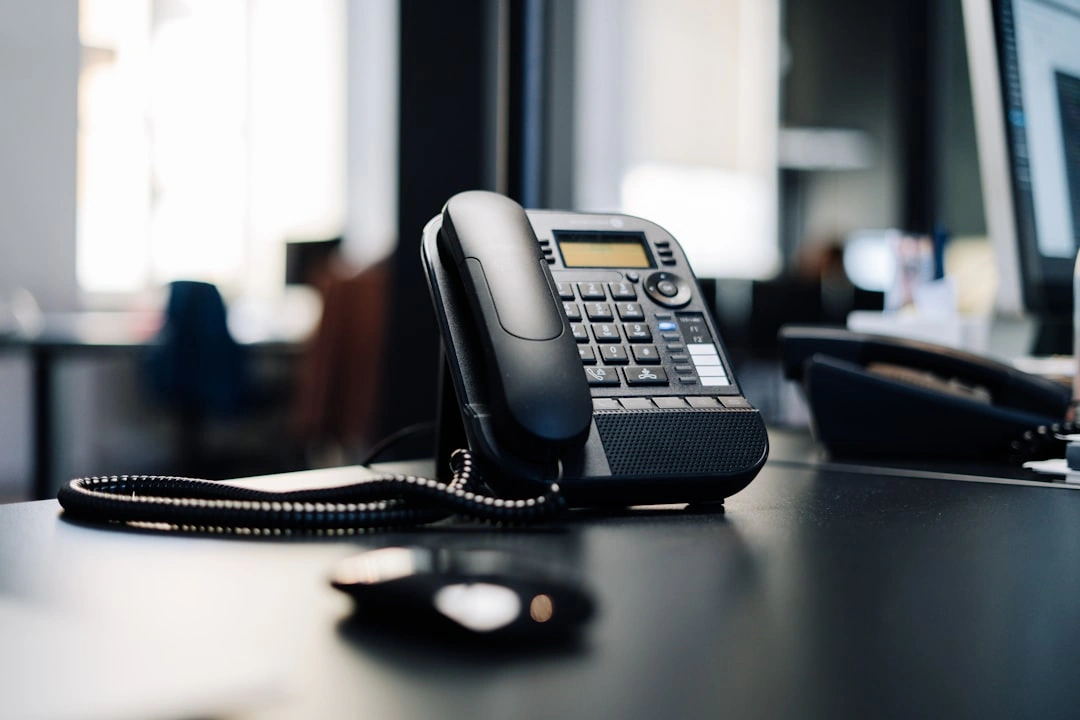
What the Cost of Missed Calls for HVAC & Plumbing Companies Actually Looks Like
The cost of missed calls for HVAC and plumbing companies is higher than most owners realize — and the gap between what they think they're losing and what they're actually losing can be staggering. Here's a quick breakdown:
• Inbound calls missed by average contractor — Benchmark: 30% to 50%
• Callers who hang up without leaving a voicemail — Benchmark: 80% to 85%
• Callers who never call back after reaching voicemail — Benchmark: 85%
• Estimated revenue lost per missed call — Benchmark: $1,500 to $3,000
• Estimated annual revenue loss for HVAC contractors — Benchmark: $418,275 to $1,254,825
• Customers who book with the first business that answers — Benchmark: 78%
• After-hours calls that go unanswered (without 24/7 coverage) — Benchmark: 35% to 45%
• Average residential HVAC customer lifetime value — Benchmark: $15,340
It plays out like this: your phone rings while you're under a unit, on a roof, or driving between jobs. By the time you surface, that caller has already booked with whoever picked up first. It wasn't the best contractor who won that job — it was simply the one who answered.
For smaller shops, this happens dozens of times a month without anyone realizing the full financial weight of it. Missing just two calls a day can translate to roughly $8,000 in lost monthly revenue, or around $90,000 over the course of a year.
I'm Anna Lynn Wise, CEO of Contractor In Charge, and I started my career as a dispatcher at eighteen before spending fifteen years in operations and eventually owning and managing a plumbing, HVAC, and remodeling company — which means I've seen the cost of missed calls for HVAC and plumbing companies from every angle, both on the phones and on the books. In this guide, I'll walk you through exactly how to measure what unanswered calls are costing your business and what you can do about it.
Basic cost of missed calls for hvac plumbing companies glossary:
• how after hours calls impact contractor revenue
• how missed calls cost home service businesses money
The Cost of Missed Calls for HVAC Plumbing Companies
When we look at the operations of residential service businesses across Florida and Texas, we often find that the single greatest bottleneck to growth isn't technician capacity or truck availability. It is phone capacity.
Every unanswered call represents a missed opportunity to book jobs, build customer trust, and secure long-term loyalty. When a homeowner searches for a local plumber or air conditioning specialist, they are usually doing so because they have an active, urgent problem. They are not browsing; they are looking to buy.
According to industry-wide Missed Call Statistics for Home Service Companies, the average contractor misses between 30% and 50% of all inbound calls. If your shop receives 200 calls a week, that means 60 to 100 potential customers are hearing a ringing phone that never gets answered.
The immediate cost is the loss of that single service ticket. But the damage goes much deeper:
• The Death of Customer Retention: A customer who cannot reach you when their water heater is leaking will immediately call someone else. Once they experience good service from a competitor, you have likely lost them forever.
• Depressed Booking Rates: If your customer service representatives (CSRs) are overwhelmed and letting calls go to voicemail, your overall booking rate plummets. A healthy CSR booking rate should sit between 65% and 75%. When call capacity is stretched, that rate drops, dragging down overall profitability.
• Reputational Erosion: Modern consumers expect instant communication. When a company fails to answer, it signals a lack of professionalism. Trust is broken before a technician ever has the chance to step foot in the home.
Step-by-Step: How to Calculate Your Lost Revenue

Many home service business owners underestimate their missed call rate by 60% or more. They only count the missed calls they actually see on their personal cell phones or the voicemails left in the main inbox. To find your true revenue leak, we must look at the actual math.
You can learn more about this process in our guide on How to Calculate Lost Revenue From Unanswered Calls. To make it simple, we use a reliable industry planning formula:
Annual Revenue at Risk = (Total Missed Calls per Year × 0.85) × Average Booking Rate × Average Job Value
Let’s break down the inputs:
1. Total Missed Calls: Pull your phone carrier logs or FSM system reports for the last 30 days. Count every unanswered call, ring-out, after-hours call, and weekend attempt.
2. The Voicemail Factor (0.85): Since approximately 85% of callers who hit a voicemail hang up without leaving a message, we multiply your missed calls by 0.85 to isolate the qualified leads who immediately moved on to a competitor.
3. Average Booking Rate: This is the percentage of answered calls your team normally converts into scheduled service appointments. For a standard shop, this is around 55% to 70%.
4. Average Job Value: The average ticket price of a booked service call.
To understand how this varies, look at the differences between standard service calls and emergency calls:
• Standard HVAC Service — Average Job Value: $450 - $950 — Booking Rate Benchmark: 65% — Expected Value per Missed Call: $290 - $615
• Emergency HVAC Call — Average Job Value: $1,125 - $2,375 (2.5x premium) — Booking Rate Benchmark: 80%+ — Expected Value per Missed Call: $900 - $1,900
• Standard Plumbing Service — Average Job Value: $385 - $500 — Booking Rate Benchmark: 70% — Expected Value per Missed Call: $270 - $350
• Emergency Plumbing Call — Average Job Value: $960 - $1,500 (2.5x premium) — Booking Rate Benchmark: 85%+ — Expected Value per Missed Call: $815 - $1,275
Let’s run a real-world scenario for a mid-sized plumbing and AC company in Tampa, FL or Houston, TX.
Suppose your shop misses an average of 30 calls per month.
• Step 1: Adjust for voicemail hang-ups: 30 calls × 0.85 = 25.5 high-intent callers who hung up and called a competitor.
• Step 2: Apply your average booking rate (let's assume a conservative 60%): 25.5 × 0.60 = 15.3 lost jobs.
• Step 3: Multiply by your average job value (let's use $500 as a blended average for plumbing and HVAC): 15.3 lost jobs × $500 = $7,650 in lost revenue per month.
• Step 4: Annualize the loss: $7,650 × 12 = $91,800 in lost revenue per year.
If you are a larger multi-truck operation missing 100 calls a month, that annual loss easily climbs past $300,000.
Why Voicemail and Slow Callbacks Fail to Secure Appointments
A common misconception among contractors is that voicemail is an acceptable safety net. Many believe that if a job is important enough, the homeowner will leave a message, and the office can simply call them back.
In June 2026, consumer behavior has shifted entirely away from this line of thinking. The modern consumer has been trained by on-demand services to expect immediate, live engagement. When they call a service provider, they are looking for a real person to answer their questions and book jobs on the spot.
If you let a call go to voicemail, you are essentially telling the customer to go elsewhere. Our research shows that 80% of callers who hit a voicemail on a home-service line hang up without leaving a message. Furthermore, even if they do leave a message, the callback success rate is under 15%.
This reality is explored deeply in our article on How Missed Calls Cost Home Service Businesses Money.
• Why do modern consumers avoid voicemail? Let's look at the primary drivers:
— Urgency of the Situation: A homeowner with a burst pipe or a broken AC in the middle of a Texas summer heatwave cannot afford to wait. They have an active crisis and need immediate reassurance.
— The First-Responder Advantage: Speed-to-lead data shows that 78% of customers book with the first business that answers the phone. If you call back 30 minutes later, they have already scheduled with someone else.
— Lack of Trust in Voicemail: Consumers have experienced too many "voicemail black holes" where businesses never call back. They assume a voicemail box means the company is unresponsive or out of business.
— Frictionless Alternatives: With a simple search on their mobile device, a customer can find ten other local contractors with the tap of a finger. Calling the next number on the list is far easier than waiting for a callback.
The Cost of Missed Calls for HVAC Plumbing Companies After Hours
A massive portion of home service demand does not keep office hours. Between 25% and 40% of all inbound plumbing and HVAC calls occur outside of the standard 8:00 AM to 5:00 PM window. These are the evenings, weekends, and holidays when families are actually home to notice that their air conditioning has failed or their drain is backed up.
When we look at How After Hours Calls Impact Contractor Revenue, the financial stakes become even clearer. After-hours calls are rarely routine maintenance requests; they are almost always urgent emergencies.
Emergency calls carry a premium. Homeowners are willing to pay diagnostic fees and higher emergency rates to get their comfort and safety restored immediately. This means that missing a single after-hours call does not just cost you a standard service ticket — it costs you a high-margin, premium-rate job.
Missing just one emergency call a week can cost a home service business roughly $58,500 a year. Beyond the direct ticket price, you lose the opportunity to build deep customer trust. When you answer the phone at midnight on a Sunday and dispatch a technician to save a family from a flooded home, you have earned a customer for life. If you let that call roll to voicemail, you hand that lifetime relationship directly to your competitor.
The Compounding Cost of Missed Calls for HVAC Plumbing Companies During Peak Seasons
The true financial pain of missed calls is not distributed evenly throughout the year. For HVAC and plumbing contractors, revenue is highly seasonal. A massive portion of annual profitability is concentrated in peak weather windows — specifically the brutal summer heatwaves of Florida and Texas, and the sudden winter freezes that cause pipes to burst.
During these peak periods, call volume does not just increase; it spikes to 2x, 3x, or even 5x your baseline volume. Your office staff, already stretched thin, simply cannot keep up with the sheer volume of rings.
This compounding effect is detailed in our resource on How Much Revenue Are Contractors Losing From Missed Calls.
When you miss calls during peak season, the costs compound in several invisible ways:
• Wasted Marketing Spend: You likely ramp up your local service ads (LSAs) and pay-per-click (PPC) marketing during peak seasons. If you are paying $50 to $95 per lead, and then letting 35% of those calls go unanswered, you are actively throwing your marketing budget away.
• The "Voicemail Death Spiral": When customers get voicemail, they hang up. Because they didn't get service, they don't leave reviews. Over time, your lack of responsiveness can lead to frustrated customers leaving negative reviews, which directly hurts your local search rankings and reduces your future lead flow.
• Technician Underutilization: While your office is busy letting calls slip through the cracks, your field technicians might experience scheduling gaps later in the week. To maximize profit, your dispatch board must remain tightly packed, which is only possible when every inbound lead is captured and booked.
Strategic Solutions to Capture Every Inbound Lead
To stop the bleeding and protect your hard-earned revenue, you must establish a system that ensures every single call is answered by a live, professional voice — 24 hours a day, 7 days a week, 365 days a year.
Trying to solve this by forcing your existing office staff to work longer hours or answer phones while driving is a recipe for burnout and scheduling errors. Instead, smart contractors rely on professional, outsourced call handling solutions.
We discuss these strategies in our guide on How to Improve Call Answer Rates for Service Businesses.
• A professional, high-converting call answering setup must include several key features:
— 24/7/365 Availability: Real, live human coverage for nights, weekends, and holidays so you never miss an emergency ticket.
— Direct CRM Integration: Your answering service should not just take messages; they should have the training to book jobs directly into your dispatch software (such as ServiceTitan or Housecall Pro) in real time.
— Customized Intake Scripts: Every call should be handled according to your company’s specific standards, using consistent qualification questions to ensure technicians are dispatched efficiently.
— Bilingual Support: In diverse markets like Florida and Texas, being able to seamlessly assist Spanish-speaking callers is a massive competitive advantage that instantly expands your booking potential.
— Instant Dispatch Escalation: A clear process for warm-transferring true emergency calls directly to your on-call technicians, while booking non-urgent calls for regular business hours.
By offloading your overflow and after-hours calls to a dedicated team like Contractor In Charge, you free up your in-house staff to focus on high-value office tasks, parts ordering, and managing field operations, while knowing that every dollar of your marketing spend is being captured.
Frequently Asked Questions About Missed Call Revenue Loss
How many calls do HVAC and plumbing companies typically miss?
The average home service contractor misses between 20% and 30% of their total inbound call volume during normal business hours. However, this number rises sharply to 40% to 50% during peak seasonal surges, lunch hours, and after-hours windows.
Without a dedicated 24/7 call answering solution, the vast majority of evening and weekend calls go completely unanswered, which means shops are missing out on the most lucrative emergency opportunities of the week.
What is the average customer lifetime value for home service contractors?
While a single service ticket might be worth a few hundred dollars, the average residential HVAC customer is worth approximately $15,340 over the lifetime of the relationship. This includes recurring preventative maintenance agreements, system repairs, duct cleaning, and eventual full system replacements over a 5-to-10-year period.
When you miss a call from a new homeowner, you aren't just losing a quick repair job — you are handing over fifteen thousand dollars of future lifetime revenue to the competitor who answered the phone.
How does a 24/7 answering service improve booking rates?
A 24/7 answering service dramatically improves booking rates by eliminating the delay that kills home service leads. Because 78% of customers book with the first company to respond, answering the phone live within three rings guarantees you win the speed-to-lead race.
As detailed in our analysis of How After Hours Call Handling Increases Revenue, having trained professionals who can instantly book jobs directly into your scheduling software ensures that callers are committed to your business before they ever have a chance to call another contractor.
Conclusion
The numbers do not lie: letting your phones ring out or roll to voicemail is the single most expensive mistake an HVAC or plumbing business can make. In a highly competitive market, your responsiveness is your brand.
At Contractor In Charge, we help home service contractors across the USA capture every opportunity, protect their marketing investments, and grow their businesses. Our specialized, US-based teams understand the unique demands of the plumbing, HVAC, and electrical trades. We don't just take messages — we act as a seamless extension of your office, booking jobs directly into your software and delivering the outstanding customer care your clients deserve.
Do let another profitable lead slip through the cracks. Reach out to us today to explore our Contractor Answering Service and learn how we can help you turn missed calls into booked jobs.