

Preparing Your HVAC Dispatch for the Shoulder Season: Shifting Focus from Repair to Replacement

The Immediate Drop in Summer Cooling Calls and Emptying Dispatch Boards
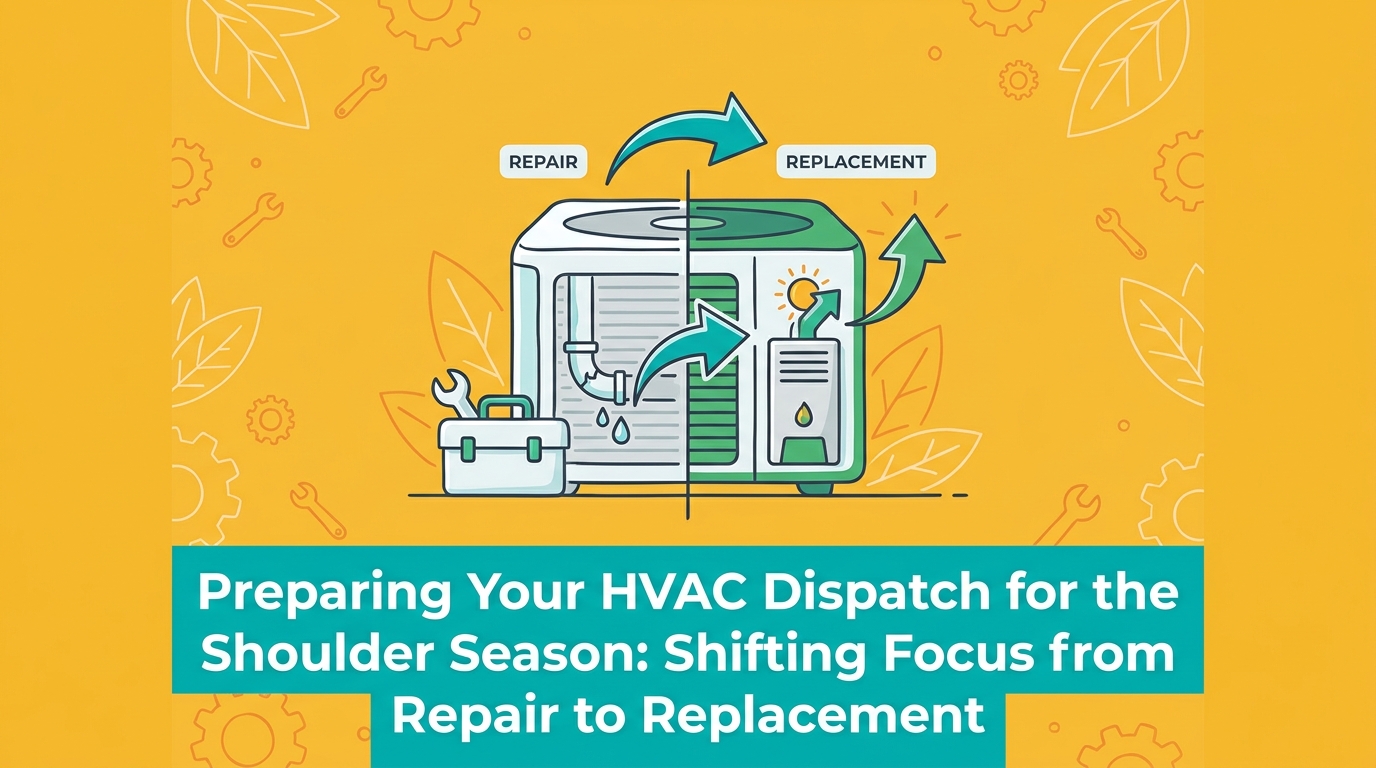
In our years of managing call centers for home service professionals, we've seen firsthand that as the September shoulder season approaches, getting your HVAC dispatch ready to shift from repairs to replacements becomes the most critical operational pivot your business will make all year. For the past several months, your board has likely been overflowing with reactive emergency repair calls. Homeowners were desperate for immediate cooling relief, and your primary challenge was simply keeping up with the sheer volume of inbound requests. But as extreme summer heat subsides, that phone inevitably stops ringing with the same frantic urgency.
This sudden decline in reactive calls presents a significant operational risk. If the dispatch board isn't actively managed and transitioned, you face the immediate threat of underutilized technicians, unapplied labor hours, and a sharp dip in daily revenue. The transition from summer to fall cannot be treated as a passive "slow period" where you simply wait for the first winter freeze. Instead, it must be approached as a deliberate, strategic window.
Shifting your focus from reactive survival to proactive revenue generation requires a fundamental change in how your team handles the dispatch board. You must transition from simply catching inbound emergencies to actively hunting for high-margin replacement opportunities hidden within your existing customer base. This deliberate operational pivot in dispatch strategy and call handling is what separates businesses that struggle through the fall from those that maintain strong, consistent profitability year-round.
At Contractor in Charge, we know that if your in-house team is overwhelmed by this transition, partnering with a professional HVAC answering service can stabilize your intake process while you focus on strategic growth.
Reconfiguring Your Dispatch Board for Proactive Outbound Focus
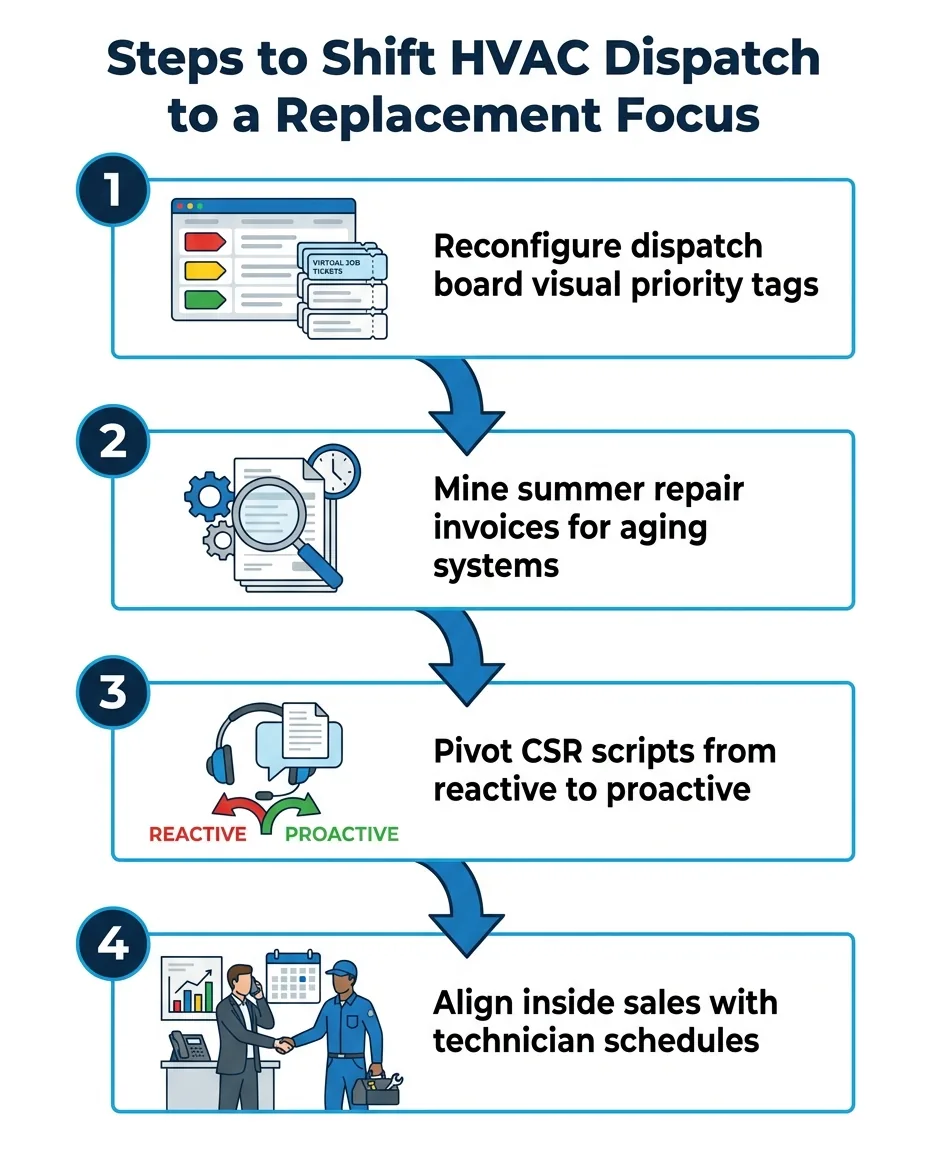
Adjusting your dispatch software to prioritize outbound calls and replacement follow-ups over emergency intake is the first mechanical step in mastering the September shoulder season. Your software is the central nervous system of your operations, and if it still looks and functions like it did in mid-July, your dispatchers will remain stuck in a reactive mindset.
To successfully reorganize the board, you must physically change what your dispatchers see and focus on every morning. This means moving outbound campaigns, aging equipment follow-ups, and proactive maintenance calls to the top of the visual hierarchy.
1. Audit the current board: Clear out lingering, low-priority summer tickets that are cluttering the view.
2. Establish proactive tags: Create specific labels in your CRM for "Replacement Lead," "Aging System," and "High-Priority Outbound."
3. Reassign dispatcher roles: Shift your strongest communicators away from inbound intake and dedicate them entirely to outbound follow-up.
4. Set daily contact quotas: Require a specific number of outbound dials per shift to maintain momentum.
Handling this shift internally can be challenging, especially if you are short-staffed. A pattern we see often is a sudden loss of dispatcher and call taker staff right as the weather shifts. When one of our clients experienced this right at the end of 2023 just as the winter season hit, bringing in external support to take over full-time dispatch and call-taking responsibilities helped them navigate the transition flawlessly. The company provided excellent customer service during the gap and is now growing and running better than ever, proving the value of dedicated board management.
Visualizing the Shift in Dispatch Software
Adjusting color codes and priority flags for proactive replacement leads instantly changes dispatcher behavior. If emergency calls were coded red during the summer, assign that same urgent red color to "High-Margin System Assessments" during the fall. Filtering out low-priority, low-margin maintenance calls to a separate view ensures your team focuses their premium time on calls most likely to yield system replacements.
Dedicating Time Blocks for Outbound Efforts
Structuring dispatcher shifts to maximize contact rates requires discipline. You cannot simply tell a dispatcher to make outbound calls "when it gets slow." You must dedicate specific, uninterrupted blocks of time—such as 9:00 AM to 11:00 AM and 4:00 PM to 6:00 PM—exclusively to proactive outreach. Ensuring consistent follow-up on summer repair invoices during these blocks prevents lucrative replacement opportunities from slipping through the cracks.

Identifying High-Margin Replacement Opportunities in Existing Data
Our team typically sees that a customer database is a goldmine of potential revenue, provided you know exactly how to filter and extract the right information. Providing actionable advice on mining this database begins with looking backward to move forward. Reviewing your summer service records allows you to identify systems that required multiple emergency repairs over the past few months. These are your prime targets for replacement discussions.
To effectively locate these opportunities, you must filter the customer database for equipment approaching the end of its functional lifespan. Systems that are ten to fifteen years old and have a documented history of recent failures are highly likely to break down again when the winter heating season begins. Cross-referencing this repair history with upcoming pre-winter maintenance schedules allows your team to turn a standard tune-up into a comprehensive system replacement consultation.
Setting up a structured pipeline for these specific accounts ensures they are prioritized. If your internal team lacks the bandwidth to process this data and make the calls, utilizing dedicated inside sales support can provide the focused, relentless follow-up required to convert these historical data points into booked replacement appointments.
Mining Summer Repair Invoices
Spotting the "band-aid" repairs that won't survive another extreme season is an essential skill for your dispatch and sales teams. During peak summer heat, technicians often perform quick fixes just to get a system limping along. Creating targeted lists based on system age and repair frequency allows you to follow up on these exact homes.
• Multiple visits in 90 days — What It Indicates: System is fundamentally failing and unreliable. — Next Action for Dispatch: Flag for senior technician diagnostic and replacement pitch.
• System age 12+ years — What It Indicates: Nearing end of useful life; efficiency is plummeting. — Next Action for Dispatch: Schedule proactive pre-winter assessment.
• Costly component failure — What It Indicates: Homeowner is throwing good money after bad. — Next Action for Dispatch: Route to inside sales for ROI comparison discussion.
• Frequent refrigerant leaks — What It Indicates: Coil deterioration; environmentally unsustainable. — Next Action for Dispatch: Prioritize for immediate outbound replacement campaign.
By systematically tracking these indicators, your team can build highly targeted calling lists that yield far higher conversion rates than cold outreach.
Updating CSR Scripts for HVAC Replacement Conversations
Shifting the language and approach of your customer service team from reactive empathy to proactive consultation is one of the most difficult, yet rewarding, operational changes you can make. The fundamental difference between handling an emergency breakdown and initiating a replacement discussion lies in the pacing and the objective of the call. In summer, the goal is speed and reassurance. In the September shoulder season, the goal is education, value building, and long-term planning.
We recommend providing framework adjustments for your team by deploying proven CSR scripts for HVAC replacement that focus on long-term reliability and energy efficiency. Your representatives must be trained to pivot conversations naturally. When a customer calls to schedule a routine fall furnace check, the CSR should be equipped to ask about the performance of the entire system during the summer, seamlessly transitioning the dialogue toward a comprehensive evaluation.
This requires a higher tier of phone skills. Leveraging specialized virtual customer service and trained CSRs who can seamlessly pivot phone scripts from reactive emergency intake to proactive outbound replacement and maintenance scheduling gives your business a distinct competitive advantage. Specialized agents understand how to guide the homeowner toward a high-ticket decision without sounding pushy or aggressive.
Moving Away from Reactive Empathy
Replacing emergency reassurance with consultative value propositions changes the dynamic of the customer relationship. Instead of saying, "We will get someone out there right away to fix the cold air," the script evolves to, "Let's have our senior technician evaluate the system to ensure you aren't facing another expensive breakdown when the freezing weather hits." Focusing on peace of mind and pre-winter preparation positions your company as a trusted advisor rather than just a reactive repair service.
Training Your Team on the Reactive-to-Proactive Pivot
Even with the best scripts and strategies in place, addressing the operational bottleneck of training in-house staff to execute these new frameworks during the transition is a major hurdle. Acknowledging the difficulty of changing ingrained habits after a chaotic, busy summer season is the first step. Your dispatchers are exhausted, and asking them to suddenly become proactive outbound sales engines requires patience, practice, and structured support.
To build confidence in the new conversational frameworks, you must implement consistent role-playing exercises. Simulating customer objections—such as "I think we'll just wait until it breaks" or "We don't have the budget for a new unit right now"—helps your team develop smooth, professional rebuttals.
• Schedule daily role-play sessions: Dedicate 15 minutes every morning to practicing outbound scripts.
• Review recorded calls together: Analyze successful pivots and identify areas where CSRs missed replacement cues.
• Create quick-reference objection sheets: Keep common rebuttals visible at every dispatcher's workstation.
• Monitor conversion metrics daily: Track how many outbound calls successfully turn into booked replacement consultations.
We recently worked with a business that needed help with call handling and dispatching services during a particularly demanding operational shift. By utilizing an external team that expertly handled customer calls and dispatched them while adjusting schedules as needed, they maintained organized and reachable services and received valuable operational feedback. Discussing the benefits of augmenting the in-house team with a virtual customer service team to handle the learning curve ensures seamless handling of calls, dispatching, and rescheduling during your internal training period.
Overcoming the Operational Bottleneck
Managing call volume while simultaneously retraining staff is a delicate balancing act. You cannot afford to let the phones ring unanswered while your team is in a training meeting. Using call recording reviews to refine proactive pitches allows for asynchronous learning. You can highlight a beautifully executed transition from a maintenance inquiry to a replacement consultation, using it as the gold standard for the rest of the dispatch floor to emulate.
Aligning Dispatch and Inside Sales for Maximum Technician Utilization
We've found that ensuring outbound calls actually translate into booked appointments that keep technicians busy and maintain revenue requires tight alignment between your dispatch board operators and your inside sales team. If your CSRs are booking proactive appointments, but dispatch is routing the wrong technicians to those calls, your conversion rates will plummet. Establishing clear, daily communication channels between these two departments is non-negotiable.
You must coordinate outbound scheduling campaigns specifically designed for fall maintenance and system upgrades. This involves looking at the board days in advance, identifying gaps in the schedule, and directing outbound efforts to fill those specific geographic zones. Monitoring technician schedules daily allows you to pivot your calling lists. If a senior sales technician has an open afternoon in a specific zip code, inside sales should immediately target aging systems in that exact neighborhood.
Tracking conversion rates from proactive calls to completed replacement installations allows you to measure the ROI of your shoulder season strategy. For a deeper dive into optimizing this specific workflow, reviewing strategies for structuring outbound scheduling campaigns for fall maintenance can provide the granular routing tactics needed to maximize your team's windshield time and face-to-face consultation hours.
Coordinating Outbound Campaigns
Matching technician skill sets with the right type of proactive appointments is crucial for closing high-margin jobs. A junior technician is perfect for a standard filter change, but a ten-year-old system with a history of compressor issues requires a senior technician capable of having a nuanced replacement conversation. Using strategic scheduling to minimize drive time and maximize face-to-face consultation time ensures your most persuasive technicians are spending their hours talking to homeowners, not sitting in traffic.
Managing the Shift in Customer Psychology After Extreme Heat
Our dispatch professionals know that addressing how to create urgency for replacements without relying on weather-driven discomfort is the final piece of the shoulder season puzzle. Transitioning from extreme summer heat to milder fall weather requires CSRs to create a new type of urgency around replacing aging systems before winter, rather than relying on weather-driven discomfort. When a house is a comfortable 72 degrees naturally, the homeowner feels no immediate pain, making the sale significantly more challenging.
You must recognize that immediate comfort is no longer the primary motivator for homeowners. Therefore, you must shift the sales narrative to focus on preventing mid-winter breakdowns, avoiding emergency holiday fees, and improving overall energy efficiency before the heating bills arrive. Educating customers on the advantages of replacing systems during a slower season—such as better scheduling flexibility, potential eligibility for generally applicable energy rebates or tax credits on qualifying installations, and avoiding the winter rush—provides logical incentives to act now. We always recommend advising readers to verify current rebate and incentive programs with their utility provider or a tax professional.
Furthermore, train your CSRs to gently remind customers of the stress caused by their summer system failures. A simple, "I see we had to come out twice last July when your AC went down; let's get the heating side replaced now so you don't face that same stress in January," effectively leverages past pain to drive future action.
Highlighting Pre-Winter Reliability
Positioning a new installation as a proactive defense against freezing temperatures shifts the homeowner's perspective from "spending money" to "investing in security." Discussing the long-term cost benefits of upgrading failing equipment before it completely breaks down—such as avoiding the cost of a catastrophic failure and the subsequent emergency repair fees—helps justify the immediate investment during a mild weather month.
Frequently Asked Questions About Shoulder Season Dispatching
How do I adjust my HVAC dispatch board for the fall?
Adjusting your dispatch board for the fall requires shifting visual priorities from reactive emergency calls to proactive outbound leads. You should create specific color-coded tags for aging systems, follow-up replacement quotes, and high-priority maintenance agreements. By filtering out low-margin calls and bringing high-margin replacement opportunities to the top of the board, dispatchers are forced to focus on revenue-generating activities during slower inbound periods.
What are the best CSR scripts for HVAC replacements?
The most effective CSR scripts for HVAC replacement pivot the conversation from reactive empathy to proactive consultation. Instead of simply booking a repair, the CSR should ask diagnostic questions about the system's age and summer performance. Scripts should frame a senior technician's visit not just as a fix, but as a comprehensive evaluation to prevent mid-winter breakdowns and improve long-term energy efficiency.
How do I transition my HVAC business into the shoulder season?
Transitioning into the September shoulder season requires a deliberate operational pivot from inbound order-taking to outbound sales hunting. This involves auditing your summer repair invoices to identify failing systems, retraining your dispatchers to make outbound calls, and aligning your schedule to prioritize high-margin replacement consultations. Treating this transition as a strategic sales window rather than a slow period is key to maintaining cash flow.
How can I keep my HVAC technicians busy in September and October?
Keeping technicians busy during the fall requires a dedicated, daily outbound calling campaign targeting your existing customer database. Focus on customers who had multiple "band-aid" repairs during the summer, systems over ten years old, and expiring maintenance agreements. By systematically mining this data and booking proactive assessments, you can fill your technicians' schedules with profitable work before the winter weather arrives.
What is the most effective way to sell HVAC replacements during mild weather?
Selling replacements during mild weather requires shifting the customer's psychology away from immediate comfort and toward long-term reliability and financial savings. Your team must create urgency by highlighting the risks of mid-winter breakdowns, the benefits of flexible fall scheduling, and the long-term energy savings of a new unit. Reminding them of the stress of past summer breakdowns can also effectively motivate proactive upgrades.
Secure Your Fall Revenue with Strategic Dispatch Management
In our experience, treating the transition period as a strategic window rather than a slow period to survive is the defining characteristic of a highly profitable HVAC operation. Reconfiguring your dispatch software, mining your summer data, and deploying updated CSR scripts for HVAC replacement are the operational keys to converting routine check-ups into high-margin installations. By proactively hunting for these opportunities, you protect your revenue and keep your technicians fully utilized.
Executing these outbound campaigns effectively requires focus, consistency, and highly trained personnel. If your in-house team is struggling to balance remaining reactive calls with proactive outreach, do not let those replacement opportunities slip away. Partnering with a professional 24/7 live agent call center ensures your outbound campaigns are executed flawlessly, securing your fall revenue and setting your business up for a highly successful winter season.