

The Ultimate Guide to Professional Call Center Etiquette for Contractors

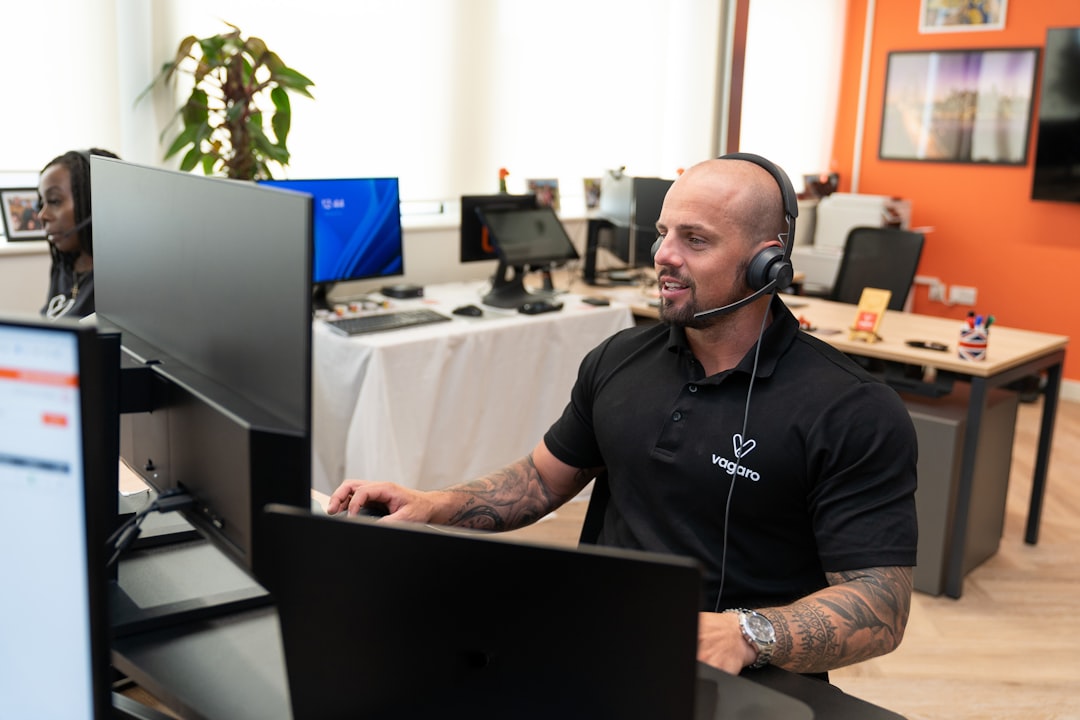
Why Every Call Your Team Answers Either Wins or Loses You Business
Knowing how to train staff to answer calls professionally can be the difference between a booked job and a lost customer. Here is a quick overview of what that training covers:
1. Answer fast - Pick up within 2-3 rings
2. Greet with purpose - State the company name, your name, and offer to help
3. Use a positive, clear tone - Smile while speaking; it comes through in your voice
4. Follow a script - Consistent greetings build trust and reduce errors
5. Handle holds correctly - Always ask permission and check back every 45 seconds
6. Transfer calls the right way - Explain why, confirm availability, and introduce the caller
7. Take accurate messages - Record name, number, date, and next action
8. Practice and measure - Use call recordings, role-play, and scorecards to improve over time
For contractors in the trades, a phone call is rarely just a phone call. It is often the very first moment a potential customer experiences your business. Research shows that 94% of people who have a positive first interaction are more likely to come back and buy again. Yet a rushed greeting, a fumbled transfer, or background noise can undo that opportunity in seconds.
The stakes are real. Missing calls or handling them poorly costs contractors booked jobs every single day. And for a plumbing, HVAC, or electrical business where the phone is the primary booking channel, that adds up fast.
I am Anna Lynn Wise, CEO of Contractor In Charge, and I started my career as a dispatcher at eighteen years old before spending decades in ownership and operations of trades businesses - giving me a hands-on understanding of exactly what it takes to train staff on how to train staff to answer calls professionally in ways that actually convert callers into booked appointments. In the sections below, we will walk through everything you need to build a team that handles every call with confidence.

Why Professional Phone Etiquette is the Foundation of Your Reputation
In the home services industry, your phone is your lifeline. Whether you are in Tampa, FL, or running a busy HVAC shop in Texas, the way your staff answers the phone dictates your brand identity. We often say that The Sound of Trust - Why Every Call Is a First Impression That Matters is the most valuable asset you have. If a homeowner has a leaking pipe or a broken AC in the middle of a Florida summer, they aren't just looking for a technician; they are looking for relief.
Professional etiquette builds immediate customer loyalty. Statistics show that 58% of customers are actually willing to pay more for better service. When your team sounds organized and empathetic, you gain a massive competitive advantage over the "Chuck in a truck" who answers with a grumpy "Hello?" or lets the call go to a full voicemail box.
A staggering 94% of people say a positive initial customer service experience makes them more likely to buy from you again. This isn't just about being "nice"—it’s about revenue protection. Effective call handling ensures that every lead is captured, especially during those critical evening and weekend hours. Understanding How After-Hours Call Handling Increases Revenue can help you realize that a professional voice at 2 AM is often the difference between a $500 emergency service call and a hang-up that goes straight to your competitor.
How to Train Staff to Answer Calls Professionally: The 6 P’s Framework

When we teach our teams how to train staff to answer calls professionally, we rely on the "6 P’s Framework." This provides a simple, memorable checklist for every person who picks up the phone.
• Promptness: Answer by the second or third ring. Waiting too long creates anxiety for the caller.
• Polite Language: Use "please," "thank you," and "sir/ma'am" to maintain a respectful boundary.
• Professional Tone: Keep the voice steady and avoid slang like "yep," "no problem," or "hang on."
• Preparedness: Have the dispatch software or pen and paper ready before the call starts.
• Positivity: Start the call with energy. A "can-do" attitude is infectious.
• Patience: Let the caller finish their story (even if it's a long one about their flooded basement) before jumping in with questions.
Following this framework is a core part of any Improve Customer Experience Guide because it ensures consistency across the board.
Mastering the Professional Greeting and Answering Speed
The "3-second window" is the most critical part of the call. Within three seconds of picking up, the caller has already decided if they trust you. A professional greeting should always include three things: a warm greeting, the company name, and your name.
For example: "Good morning, thank you for calling [Company Name]. This is Sarah speaking. How can I help you today?"
This structure confirms the caller reached the right place and knows exactly who they are talking to. Speed is equally vital; customers expect their calls to be picked up in five minutes or less, but in the trades, they’ll often hang up after just 30 seconds of ringing. Learning How to Solve Missed Call Revenue Loss (Even If You've Never Tried It Before) starts with simply answering the phone before the fourth ring. Finally, ensure your staff is in a quiet environment. Background noise like barking dogs or loud music screams "unprofessional" and erodes trust instantly.
Using Scripts to Train Staff to Answer Calls Professionally
Many staff members worry that scripts will make them sound like robots. However, scripts are actually tools for freedom. When you know exactly what to say, you can focus on how you say it—with empathy and warmth.
Effective scripts for contractors should include decision trees. For instance, if a caller says "my heater is out," the script should lead the staff member to ask about the age of the unit and the urgency of the situation. Using Inbound Call Handling & Appointment Booking scripts ensures that your team doesn't forget to ask for the zip code or the best call-back number.
The goal is to book the job, not just "take a message." A good script guides the staff to offer a specific time slot: "We have a technician in your area this afternoon between 2:00 and 4:00. Does that work for you?" This proactive approach is much more effective than asking, "When do you want us to come out?"
Advanced Call Handling: Holds, Transfers, and Difficult Conversations
Once the initial greeting is over, the real work begins. Managing the flow of a call requires finesse, especially when things get complicated.
• Process — Warm Transfer: You speak to the recipient before connecting the caller. — Cold Transfer: You send the caller directly to the next person/extension.
• Best For — Warm Transfer: Complex issues, upset customers, or high-value leads. — Cold Transfer: Simple requests or when the recipient is expecting the call.
• Caller Experience — Warm Transfer: High. They don't have to repeat their story. — Cold Transfer: Low. They may feel "dumped" on the next person.
When placing a caller on hold, always ask permission. "Would you mind if I place you on a brief hold while I check the technician's schedule?" Wait for their "Yes" before hitting the button. Once they are on hold, the 45-second rule applies. Check back frequently to let them know you haven't forgotten them.
If a caller is irate—perhaps because their water heater leaked all over their new hardwood floors—staff must use de-escalation techniques. This involves active listening and mirroring. If the customer is speaking fast, speak slightly slower and calmer to bring the "temperature" of the call down. Acknowledge their feelings: "I understand how frustrating it is to deal with a leak like this. Let’s get someone out there to help." Knowing How to Handle After-Hours Calls for a Plumbing Company often means knowing how to stay calm when the customer is in a panic.
Best Practices for Managing Holds and Message Taking
Nothing frustrates a customer more than having to repeat their phone number three times because the staff member didn't write it down. Accurate message-taking is one of The 5 Essential Roles of a Home Services Call Center: Driving Efficiency and Customer Satisfaction.
Every message should include:
• The caller’s full name (ask for spelling if unsure).
• A reliable call-back number.
• The date and time of the call.
• A brief but clear description of the issue.
• The "next action" promised (e.g., "The manager will call you back by 4 PM").
Confidentiality is also key. If you are taking a message on a paper form, don't leave it lying around where other customers or unauthorized staff can see it. Always verify contact information by repeating it back to the caller before hanging up. This simple step prevents hours of "phone tag" caused by a single transposed digit in a phone number.
Implementing a Continuous Training and Measurement Program
Training isn't a "one and done" event. To truly master how to train staff to answer calls professionally, you need a system of continuous improvement.
• Role-Playing: Spend 15 minutes a week acting out common scenarios, like a customer complaining about a bill or a telemarketer trying to get through to the owner.
• Shadowing: Have new hires sit with your best performers to hear how they handle tricky situations.
• Call Recordings: Listen to actual calls together. This isn't to "catch" people doing things wrong, but to identify "teachable moments."
• Scorecards: Use a simple point system for things like "Used greeting correctly," "Asked for the booking," and "Thanked the caller."
By looking at The Future of Call Center Services, we see that the most successful companies are those that use data to drive their training. Set SMART goals—for example, "Increase the appointment booking rate from 60% to 70% over the next 90 days."
Measuring the Impact of Training Staff to Answer Calls Professionally
How do you know if your training is working? You look at the KPIs (Key Performance Indicators).
1. First-Call Resolution (FCR): Did the customer get what they needed on the first call, or did they have to call back three times?
2. Occupancy Rates: Are your staff members busy enough to be efficient, but not so overwhelmed that they become rude? A healthy rate is typically 85-90%.
3. Appointment Booking Rate: This is the "bottom line" for contractors. If the phone is ringing but the schedule is empty, the phone etiquette needs work.
4. Customer Net Promoter Score (NPS): Ask your customers, "On a scale of 1-10, how likely are you to recommend us based on your experience today?"
Leveraging Virtual Customer Service tools can often provide you with these analytics automatically, allowing you to see exactly where your team excels and where they need more coaching.
Frequently Asked Questions about Professional Phone Etiquette
How quickly should my staff answer the phone?
Staff should aim to answer within 2 to 3 rings. Answering on the first ring can actually startle a caller, while waiting until the fifth ring makes them feel ignored. Respecting the caller's time is the first step in building rapport. If you find your team can't keep up, a 24-Hour Live Answering Service can ensure no call goes to voicemail, which is where 64% of callers hang up.
What are the most common phone etiquette mistakes to avoid?
The biggest "no-nos" include eating, drinking, or chewing gum while on a call—the microphone picks up those sounds much more than you think. Multitasking is another trap; if a staff member is typing an email while talking to a customer, the customer can tell they don't have the staff's full attention. Avoid slang and "unchecked transfers" where you send a caller to an extension without knowing if anyone is there to pick up. Before you hire help, make sure you know the 4 Questions You Need to Ask an Answering Service to ensure they avoid these common pitfalls.
How should staff handle situations where a requested person is unavailable?
Avoid vague or overused phrases like "he’s in a conference" or "she’s stepped out." These can sound like excuses. Instead, be specific about availability: "Mr. Jones is currently on a service call and is expected back by 3:00 PM. Can I take a message, or would you like to speak with his lead technician?" Always offer an alternative or a specific time for a call-back. Choosing the Right Answering Service can help you manage these "unavailable" moments seamlessly so the customer never feels like they are being brushed off.
Conclusion
Training your staff on how to train staff to answer calls professionally is one of the highest-return investments you can make in your contracting business. It transforms your office from a "message center" into a "booking center," driving scalable growth and ensuring that the hard-earned money you spend on marketing isn't wasted on missed opportunities.
At Contractor In Charge, we understand that as a business owner, you can't be on the phone 24/7. Our dedicated, US-based teams are trained specifically in the nuances of the home services industry—from plumbing to HVAC. We combine the latest technology with that essential "old-fashioned" customer care to make sure every caller feels like your only customer. If you’re ready to stop losing leads and start booking more jobs, explore how a professional Answering Service can act as a seamless extension of your team.