

Beyond the Basics: How to Optimize Your ServiceTitan Data for Peak Performance

Building a Foundation of Trust: Auditing and Cleaning Your Data
Your analytics are only as good as the data they’re based on. If your information is messy or inconsistent, your decisions will be flawed. Before you can optimize ServiceTitan data, you must build a foundation of trust by ensuring your system reflects reality. Data hygiene isn’t glamorous, but it’s essential.
Start with a pricebook audit at least quarterly. Review every service and material to ensure costs are accurate and prices reflect current market rates. Remove duplicate or outdated services. A clean pricebook ensures your job profitability reports are truthful.
Next, standardize your job tags and naming conventions. Inconsistent naming (e.g., “HVAC tune-up” vs. “AC check”) makes reporting impossible. Establish clear standards for naming job types, service categories, and equipment. Train your team and enforce the standards to reveal patterns in your reports.
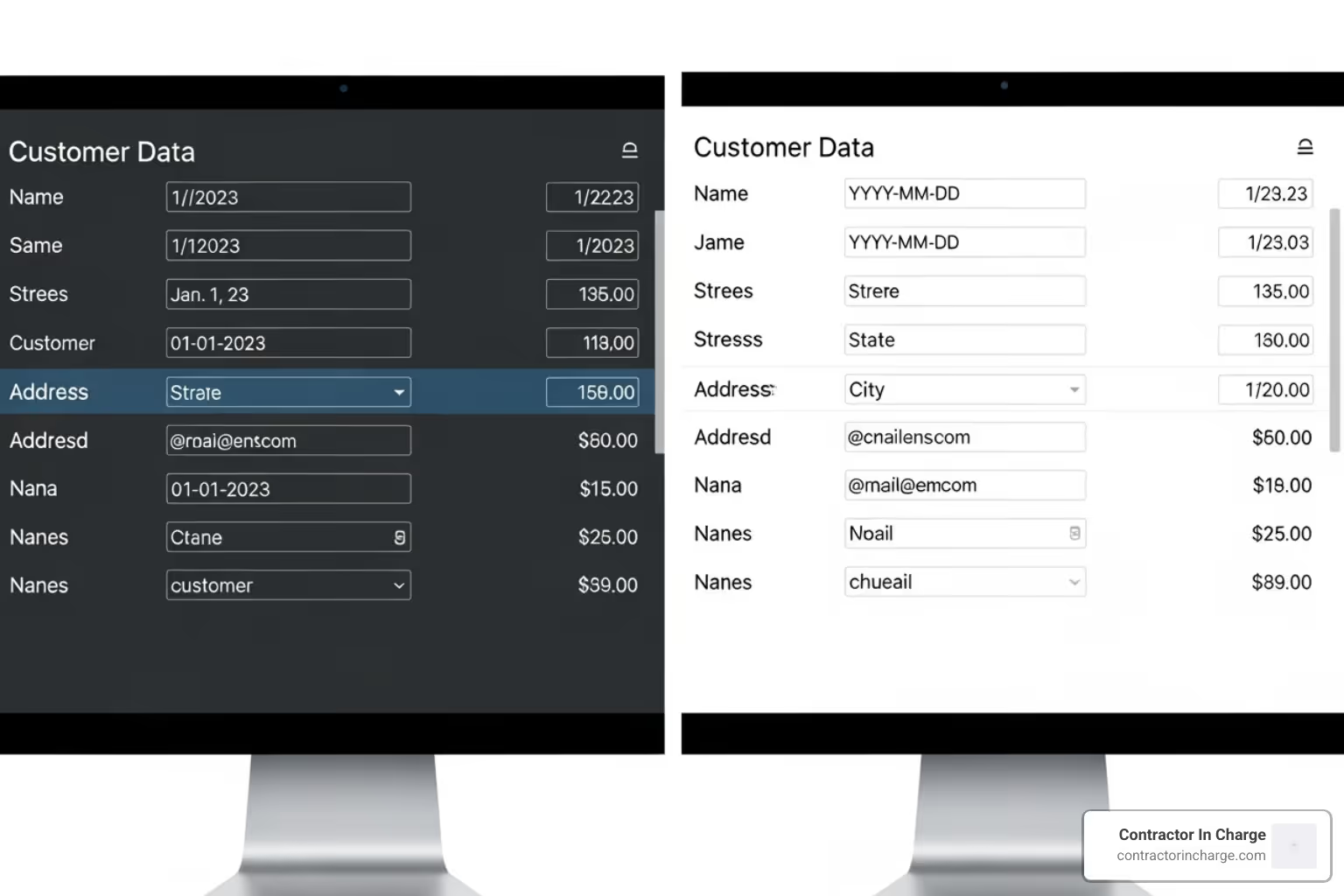
Customer record cleanup is also critical. Duplicate profiles are common and split a customer’s service history, making it impossible to track their lifetime value. Schedule time to merge duplicates, fix incomplete addresses, and standardize formatting. This cleanup pays dividends in billing, marketing, and service.
Apply this principle everywhere. Check for duplicate equipment records, material variations, or redundant recurring services. Each error muddies your reporting.
Treat data maintenance as an ongoing process. Set a regular schedule: review customer records monthly, audit the pricebook quarterly, and perform a comprehensive cleanup twice a year. Assign ownership of data quality to specific team members. When everyone understands that accuracy matters, the entire system becomes more valuable.
If you lack the time for this high-value maintenance, services like Contractor In Charge can handle the daily administrative tasks that consume your day, freeing you to focus on strategic work like keeping your data clean and actionable. Clean data means you can trust your reports, spot trends, and make decisions with confidence.
Titan Intelligence, an AI tool trained for the trades. It answers common contractor questions about material usage, drive times, and pricing benchmarks, helping you optimize ServiceTitan data with features like Ads Optimizer and Job Value Predictor.
Optimizing Operations with Dispatch and Technician Data
Your dispatch board is a performance engine. Dispatch Pro transforms it into a strategic tool, automatically suggesting job assignments based on value and technician performance. Its Smart Routing feature adjusts routes in real-time to minimize drive time, helping dispatchers handle twice the workload.
Equally important are technician performance metrics. ServiceTitan tracks job completion rates, first-time fix rates, and upsell conversions. This data shows you where to focus training. You can also analyze dispatch data to spot unproductive time from travel or delays. Features like Auto-Arrival help by automatically clocking in technicians near the job site, ensuring accurate time tracking.
Driving Profitability Through Financial and Pricebook Insights
To be profitable, not just busy, you must analyze your financial data. Start with revenue per job and job profitability analysis. ServiceTitan shows your actual profit after labor, materials, and overhead, revealing which services are true profit centers.
Your pricebook requires constant attention. Use material usage tracking to see what you use most, which can help you negotiate better supplier pricing. Price Insights, part of Titan Intelligence, compares your prices to regional averages to ensure you’re competitive.
Membership conversion rates are key to predictable revenue. Track which technicians and CSRs excel at selling them and use those top performers to train the rest of the team. Also, monitor your average ticket value and gross profit margins to see if you’re maximizing each customer interaction. Reporting can break this down by service line, showing what needs a pricing adjustment.
Enhancing Marketing ROI and Customer Retention
ServiceTitan turns marketing from an expense into an investment by showing you what works. Marketing campaign attribution connects spending to revenue, allowing you to double down on high-performing channels like Google Ads.
Lead conversion analysis reveals where you’re losing potential customers. Titan Intelligence’s Second Chance Leads feature flags unbooked calls, giving you another chance to capture business—some contractors see a 37% recapture rate.
Understanding customer lifetime value helps you prioritize your best customers. ServiceTitan’s customer history identifies loyal, high-value clients so you can focus retention efforts on them. The platform also automates the review request process and helps you respond to feedback, building your online reputation. Finally, service agreement performance data shows which memberships are profitable, helping you refine your offerings for stable, recurring revenue.
World Economic Forum survey, 74% of SMEs struggle to maximize data value due to this fragmentation. To answer complex questions that span multiple systems, you’ll need more than native reports.
This is where Business Intelligence (BI) tools and a data warehouse are useful. A data warehouse acts as a central library for all your business data, and BI tools create comprehensive dashboards and reports from it.

Unifying Your Business View: Integrating ServiceTitan with Other Systems
To get a complete view of your business, you must break down data silos. Accounting software integration with platforms like QuickBooks is a top priority. It ensures job costs, invoices, and payments flow seamlessly, eliminating double-entry and providing a real-time financial picture. Similarly, CRM integration provides a complete view of the customer journey.
This is achieved through API integration and data connectors. ServiceTitan’s API allows other software to pull data, and third-party connectors automate the process of moving that data into a warehouse like Google BigQuery or Snowflake. This creates a “single source of truth” and enables cross-functional analytics that would otherwise require significant technical resources.
Overcoming Common Data Analysis Challenges
Putting this into practice is challenging. Most contractors face obstacles:
- Lack of expertise and time: Owners are experts in their trade, not data analytics, and are too busy to dig into reports. This is where external support from consultants or partners like us can be invaluable.
- Data security and privacy: Always ensure data is secure. ServiceTitan uses strong encryption, but you must verify that any integrated third-party tools also adhere to strict security and privacy standards (like GDPR or CCPA).
- Getting team buy-in: Your team must understand why data accuracy matters. Show them how it makes their jobs easier and helps the company grow.
Avoid common pitfalls like ignoring data quality, analysis paralysis, and failing to act on insights. Start small, focus on key metrics, and build your capabilities over time. You don’t need to be a data scientist—you just need to make your data work for you.
Frequently Asked Questions about Optimizing ServiceTitan Data
Here are answers to the most common questions I hear from contractors about putting their ServiceTitan data to work.
What are the most important KPIs to track in ServiceTitan?
While it depends on your goals, certain metrics consistently define successful businesses:
- Booking Rate: What percentage of leads become scheduled jobs? If this is low, you’re losing money on marketing and lead generation.
- Average Ticket Value: What is the average revenue per job? This helps identify top-performing techs and services.
- Technician-Generated Leads: How many new opportunities (memberships, new services) are your techs creating in the field? This separates order-takers from revenue-generators.
- Job Profitability: Are you actually making money on each job after labor and material costs? Revenue is vanity, profit is sanity.
- Customer Satisfaction Score: Are customers happy? Happy customers return and refer others. Track this through CSAT, NPS, or online reviews.
- Membership Conversion Rate: What percentage of service calls result in a new membership? This is key for building predictable, recurring revenue.
- First-Time Fix Rate: Are your techs solving problems on the first visit? A high rate improves efficiency, profitability, and customer satisfaction.
How often should I audit my ServiceTitan data?
Data hygiene is an ongoing task, not a one-time project. Here’s a practical schedule:
- Quarterly Pricebook Review: Costs and market conditions change. Review your most common services every quarter to ensure your pricing remains profitable.
- Monthly Financial Reconciliation: Compare ServiceTitan’s numbers with your accounting software to catch discrepancies early.
- Ongoing Customer Data Cleanup: Dedicate a small amount of time each week to merge duplicate records and update contact information. This prevents missed opportunities and billing errors.
- Annual Workflow Review: Once a year, review your job tags and dispatch workflows to ensure they still align with your business operations and services.
When do I need more than ServiceTitan’s built-in reports?
ServiceTitan’s native reporting is powerful, but you may hit its limits in certain situations:
- When combining data from multiple systems: If you need to analyze ServiceTitan job data alongside marketing campaign data and payroll costs, you’ll need an integrated BI solution.
- For complex historical trend analysis: For sophisticated year-over-year comparisons or long-term seasonal forecasting, external BI tools offer more flexibility.
- To create highly customized visualizations: If you need specific charts or dashboards that aren’t standard in ServiceTitan, you’ll need an external tool.
- For advanced predictive modeling: While Titan Intelligence has predictive features, more advanced forecasting often requires specialized BI or data science tools.
- As your business scales: A 50-truck business has more complex data needs than a 5-truck business. At a certain point, you may outgrow built-in reporting.
My advice is to maximize ServiceTitan’s native tools first. But if you’re hitting these walls and can’t answer critical business questions, it’s time to explore integration. And if you’re spending too much time on reports, consider how partners like Contractor In Charge can handle administrative burdens, freeing you to focus on strategy.
Conclusion

Your ServiceTitan account is capturing the data you need to run a more profitable business. The key is to treat that data as a strategic asset. To optimize ServiceTitan data, you must consistently clean your records, track key metrics, and use the platform’s analytics to guide your decisions.
The path forward is one of continuous improvement. Start with regular data audits and use ServiceTitan’s dashboards to spot trends. This creates a cycle where clean data leads to better insights, which drive smarter actions and boost your bottom line.
However, finding the time for data analysis is a major challenge for busy contractors. At Contractor In Charge, we handle the daily administrative tasks—call answering, booking, and dispatch—that consume your day. This frees you to focus on high-value work like analyzing your data and planning for growth.
If you’re preparing to make the most of your system, learn how to prepare for new service management software so you can hit the ground running. Your data is ready. The only question is what you will do with the insights you uncover.