

Handling Warranty Calls Without Derailing Your Daily Dispatch Schedule and Profitability

Why Non-Billable Callbacks Threaten Your Daily Dispatch Capacity
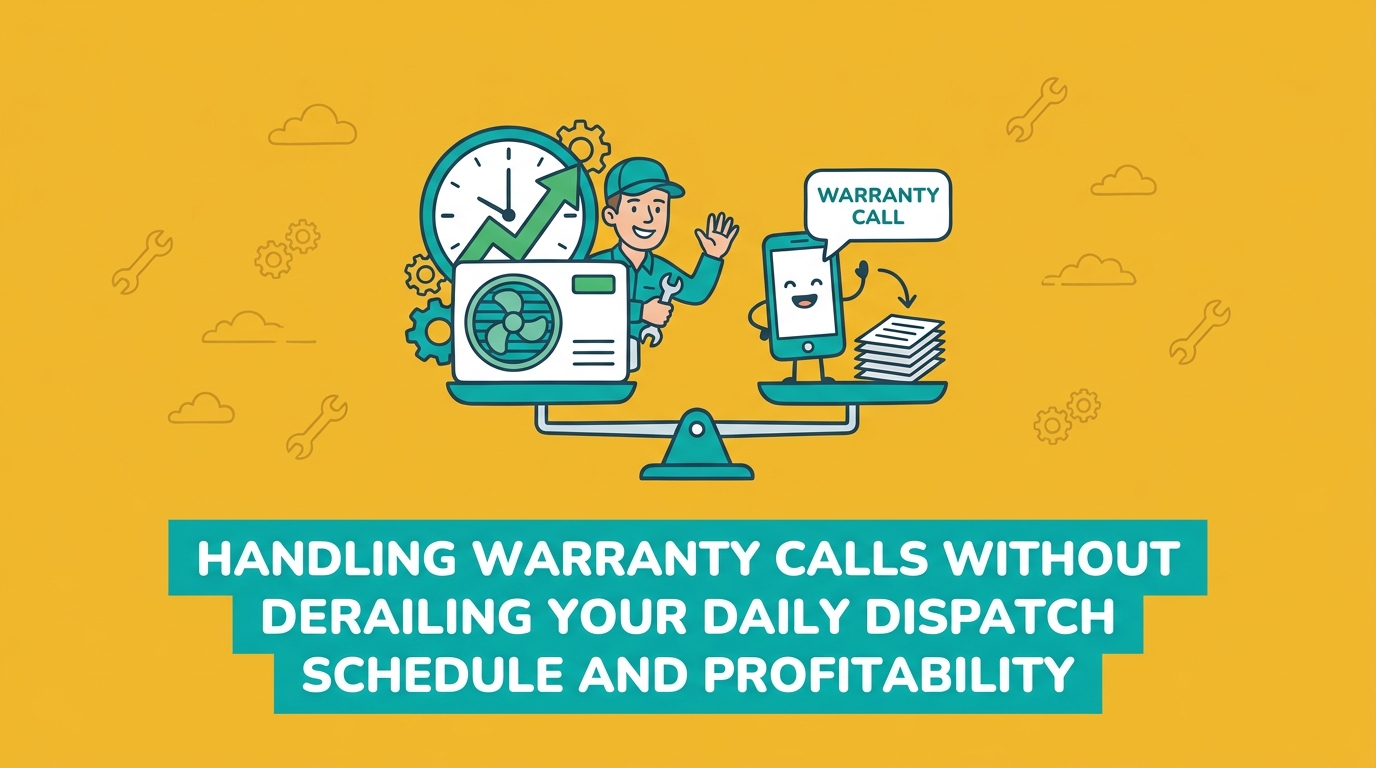
How do you prioritize a zero-revenue callback when your dispatch board is already overflowing with profitable installations? Fitting warranty calls into your day without wrecking your schedule or profits requires a strategic shift in how you view non-billable work. In our years of providing back-office support to home service contractors, we've learned that the core operational problem for any growing business is balancing urgent, non-billable warranty callbacks against highly profitable new installation or repair calls. When the board is full, making the right decision on how to prioritize and schedule a warranty callback can mean the difference between a highly profitable day and a logistical nightmare.
Failing to systemize these calls inevitably leads to dispatcher burnout. Your internal team is forced to make impossible choices, often alienating existing customers who feel ignored while simultaneously losing out on fresh revenue opportunities. When customers call back with a problem on a recently installed system, they expect immediate attention. However, dropping everything to roll a truck to a non-revenue job disrupts the entire routing plan for the day.
The solution lies in treating warranty visits as a structured, anticipated dispatch category rather than an unexpected nuisance. By analyzing common search patterns around HVAC dispatch scheduling warranty calls, it is clear that the most successful contractors do not leave these visits to chance. They build dedicated workflows designed specifically for zero-revenue situations. Integrating virtual customer service and comprehensive back office solutions provides the necessary framework to manage this load seamlessly, ensuring that existing customers feel valued without sacrificing the day's revenue goals.
The Impact of Extreme Weather on Callback Volume
Climate and weather spikes directly correlate with a sudden influx of warranty claims, creating massive hurdles for unprepared dispatch teams. A pattern we see often during the peak summer cooling season is extreme heat waves pushing newly installed systems to their absolute limits. A unit that performed perfectly during mild spring weather may suddenly exhibit performance drops, airflow issues, or component stress when subjected to days of relentless high temperatures.
Unprepared dispatchers often face sudden, overwhelming spikes in warranty callbacks when these systems falter under maximum load. Homeowners who just invested in a new system will understandably panic if their home is not cooling adequately during a heat wave. If your dispatch board is already packed with emergency no-heat or no-cool calls from new customers, adding a wave of warranty visits can completely collapse your routing efficiency.
Having a proactive plan to manage high call volume before the weather turns is absolutely critical. To understand the operational shift required, consider the difference in how systems behave under different weather conditions:
• Mild Weather (Spring/Fall) — System Stress Level: Low to Moderate — Typical Callback Drivers: Minor thermostat adjustments, unusual noises, airflow balancing. — Dispatch Impact: Easily absorbed into standard daily routing with minimal disruption.
• Extreme Heat Waves — System Stress Level: Maximum Capacity — Typical Callback Drivers: Tripped breakers, frozen coils from continuous running, undersized ductwork exposed. — Dispatch Impact: High urgency, threatens to displace high-margin emergency replacements.
• Deep Winter Freezes — System Stress Level: Maximum Capacity — Typical Callback Drivers: Defrost board failures, heat pump auxiliary heat lockouts. — Dispatch Impact: High urgency, requires highly skilled technicians to diagnose complex faults.
By anticipating these weather-driven spikes, your team can adjust capacity planning in advance, ensuring that when the extreme weather hits, you already have a strategy in place to handle the inevitable percentage of systems that will need a second look.
Establishing a Warranty Call Triage Protocol
To protect your board, we recommend implementing an actionable, step-by-step framework for categorizing warranty calls before they ever hit the main schedule. A standardized triage protocol removes the guesswork and ensures every callback is handled with consistent professionalism.
1. Step 1: Verify the warranty status and original installation details immediately during intake. The very first action your customer service representative (CSR) must take is pulling up the customer's profile. Confirm the installation date, the exact equipment installed, and whether the labor warranty is still active. This prevents rolling a truck for a "warranty" call that actually expired months ago.
2. Step 2: Assess the severity of the issue. Not all warranty calls require a drop-everything emergency response. A total system failure (e.g., the AC is completely dead and the house is heating up rapidly) requires a different response than a minor performance drop (e.g., one room feels slightly warmer than the rest of the house). Train your intake team to ask diagnostic questions to gauge true urgency.
3. Step 3: Categorize the callback based on operational urgency and available technician skill sets. Once the severity is known, tag the call appropriately. A complex diagnostic issue might require a senior technician, while a simple thermostat recalibration could be handled by a junior tech or even a maintenance apprentice. Matching the right skill level preserves your senior technicians for high-revenue installations.
4. Step 4: Route the categorized call into designated non-billable time blocks. Instead of disrupting active, revenue-generating routes, slot the triaged callback into specific windows reserved for zero-revenue work. This honors the warranty commitment while keeping the primary dispatch board intact.


Time-Blocking Strategies for Zero-Revenue Calls
Routing efficiency frameworks are the strongest defense for protecting your daily profit margin. If you allow non-billable work to be scheduled haphazardly throughout the day, you will inevitably cannibalize prime revenue-generating hours. The most effective strategy our team advocates for is implementing strict time-blocking.
Reserve specific end-of-day or historically low-traffic slots exclusively for warranty visits. We typically advise service businesses to block out the first appointment of the morning or the final slot of the afternoon specifically for callbacks. By keeping the core hours of 9:00 AM to 3:00 PM strictly reserved for high-margin repairs and installations, the business guarantees a baseline of daily profitability. If a warranty call comes in, the CSR simply offers the designated warranty slots: "We have a priority follow-up window available tomorrow morning between 8 and 10 AM."
Geographically cluster warranty calls with nearby profitable jobs. Unapplied labor time—the time a technician spends driving without generating revenue—is a massive drain on resources. If a warranty call must be run, the dispatcher should look at the existing board and find a revenue-generating job in the same zip code or neighborhood. Piggybacking a 20-minute non-billable visit onto the end of a highly profitable installation just down the street minimizes the financial impact of the drive time.
Structured time-blocking prevents non-billable work from destroying your routing metrics. It gives dispatchers clear rules of engagement, removing the emotional stress of trying to squeeze an angry customer into a fully booked day. When the rules are set in advance, the team can focus on execution rather than negotiation.
Scripting the Initial Intake to Set Realistic Expectations
The emotional toll on dispatchers cannot be overstated. Fielding calls from upset customers who are experiencing system issues shortly after a major purchase is incredibly stressful. De-escalating these frustrated customers at the very first touchpoint is vital for maintaining the relationship and protecting the dispatcher's mental bandwidth.
Acknowledge the stress placed on in-house dispatchers. When a homeowner calls in hot (literally and figuratively), the CSR must validate their frustration without immediately promising a drop-everything response. A poorly handled intake call can quickly escalate into a negative online review, while a professionally scripted response can turn an angry caller into a customer for life.
Outline key phrases for CSRs to validate frustration and set windows. The language used during the first 30 seconds of the call dictates the entire trajectory of the visit. Consider implementing scripts like:
• "I completely understand how frustrating it is that your new system isn't cooling properly today. Let's get this sorted out for you right away."
• "Because this is a recently installed system, I am flagging this as a priority follow-up. I have a dedicated quality assurance technician available in your area tomorrow afternoon."
• "I want to ensure we send the exact technician who specializes in this equipment to get it running perfectly. They will be there between 3 and 5 PM."
In our experience managing virtual dispatch and customer service, we've seen first-hand how transformative this can be. During a recent summer season, a growing HVAC contractor recognized the need for more efficient call handling and dispatching alongside organized accounting. By bringing in our specialized team to expertly handle calls, dispatch technicians, and manage the accounting side with high responsiveness, the business ensured that customer calls were managed effectively. The internal team was no longer overwhelmed by the emotional weight of frustrated callbacks. Efficient call handling and professional rescheduling rebuilds customer trust without forcing the primary dispatcher to make impossible schedule promises.
Leveraging Specialized Support to Filter and Route Warranty Claims
Relying solely on in-house staff during peak callback periods often creates critical operational gaps. When extreme weather hits and the phones ring off the hook, an in-house dispatcher trying to route new installations, manage technicians in the field, and field angry warranty calls will eventually drop the ball. Positioning outsourced, industry-specific back-office support as the ultimate filter is one of the most effective ways to protect dispatch capacity.
We frequently help businesses navigate this exact challenge. For example, during a busy winter season, one home service business unexpectedly lost their primary dispatcher and call taker. This created a critical operational gap right at the end of the year. By partnering with our industry-specific support team at Contractor In Charge to take over full-time dispatch and call-taking responsibilities, the company experienced a significant improvement in efficiency, enabling continued growth without missing a beat.
Utilizing live agent call center services ensures that warranty calls are intaken, categorized, and slotted according to pre-set protocols. Outsourcing back-office and call-center operations to industry-specific experts prevents warranty calls from bogging down the schedule, protecting profit margins. These highly trained agents act as a buffer. They know exactly how to de-escalate a frustrated homeowner, verify the warranty status, and slot the appointment into the designated non-billable time blocks you have established.
This specialized administrative support frees up the primary in-house dispatcher to focus exclusively on routing profitable, revenue-generating jobs. Instead of playing defense against incoming complaints, your internal team can play offense—optimizing routes, communicating with technicians, and ensuring that the day's high-margin work is executed flawlessly.
Frequently Asked Questions About Dispatching Non-Billable Calls
How should a dispatcher handle a warranty callback?
The dispatcher should first verify the warranty status and triage the severity of the issue before making any scheduling commitments. Once the urgency is confirmed, the call should then be slotted into designated non-billable time blocks or clustered geographically with existing routes to minimize lost revenue. This structured approach ensures the customer is taken care of without derailing the day's profitable jobs.
How do you prioritize HVAC service calls during peak season?
Prioritize calls based on emergency status, contract agreements like VIP maintenance members, and overall revenue potential. Ensure that zero-revenue callbacks are scheduled in a way that honors the warranty without displacing high-priority, profitable installations. By categorizing calls at intake, dispatchers can maintain a balanced board even when call volume spikes.
What is the best way to schedule non-billable service calls?
Utilize time-blocking to reserve specific windows—such as early morning or late afternoon—exclusively for non-billable work. Leverage specialized intake CSRs to manage customer expectations regarding arrival times for these specific slots. This prevents zero-revenue calls from eating into the prime hours of the day when technicians should be focused on high-margin repairs.
How can a business track field service warranty labor accurately?
Implement standardized dispatch board tags or categories for all warranty visits within your field service management software. Require technicians to log unapplied time specifically under warranty codes to accurately measure the impact on daily profitability. Tracking these metrics allows business owners to identify equipment trends or installation training gaps that are causing the callbacks.
Why does outsourcing intake help with warranty call management?
Outsourced, industry-trained CSRs act as a buffer, de-escalating frustrated customers and categorizing the urgency of the call before it ever reaches the main dispatch board. This prevents the in-house dispatcher from being overwhelmed and allows them to maintain focus on complex, revenue-generating routing. It ensures every caller receives a professional, empathetic response regardless of how busy the local team is.
Protect Your Profit Margins with Strategic Dispatching
A clear, actionable framework for triaging and slotting warranty calls preserves daily dispatch profitability while maintaining the customer trust you worked so hard to build. By treating non-billable visits as a structured category rather than a daily surprise, you empower your team to route efficiently and protect the bottom line.
Now is the time to evaluate your current dispatch board protocols. Are your dispatchers burning out trying to squeeze zero-revenue calls into a packed schedule? Are you losing out on prime installation hours because of unorganized routing? Prompt your leadership team to explore back office solutions designed specifically to handle zero-revenue calls more efficiently. As we've seen with countless partners, systemizing your approach to callbacks ensures that your business remains highly profitable, your internal team remains focused, and your customers remain completely satisfied with their service.