

Retainers for Contractors: Your Blueprint for Predictable Income


Why the Contractor Service Retainer Model is Changing the Game for Trades Businesses
A contractor service retainer model is a pricing structure where clients pay a recurring fee, typically monthly, for ongoing access to your services. This simple shift from per-project billing creates predictable income for you and guarantees service availability for your clients.
Key Elements of a Contractor Service Retainer Model:
- Recurring payments for a defined scope of services (e.g., maintenance, priority response).
- Predictable cash flow, ending the feast-or-famine cycle.
- Long-term client relationships over one-off transactions.
- Two main types: Pay-for-work (specific deliverables) or pay-for-access (availability).
You know the cycle: one month you’re turning away work, the next you’re scrambling for leads. This pattern makes it impossible to plan, invest, or hire reliably. You’re stuck in sales mode instead of doing the skilled work you’re good at.
While only 13% of service providers currently use retainer agreements, those who do report dramatically more stable revenue. Instead of chasing jobs, you build a base of clients who pay monthly for ongoing service. They get peace of mind; you get predictable income and the ability to plan your business.
I’m Anna Lynn Wise, and I’ve spent decades in the trades, from dispatcher to owner of a plumbing, HVAC, and remodeling company. Through my work at Contractor In Charge, I help contractors implement systems like the contractor service retainer model to build sustainable, profitable businesses.
The Dual-Sided Benefits of a Contractor Service Retainer Model
A contractor service retainer model isn’t just better for your business—it’s better for your clients, too. It’s a rare win-win that transforms your operations from chaotic to controlled. The constant pressure to close the next sale is reduced, replaced by real partnerships with clients who value your work long-term.
This stability isn’t just about less stress; it can increase your business valuation, making your company more attractive to partners or buyers. For clients, it means priority service in emergencies, predictable budgets, and proactive maintenance that prevents expensive disasters. You become a trusted partner, not just another contractor. At Contractor In Charge, we help you manage these relationships without drowning in admin—learn more about Performance Accounting and how we support your retainer clients.
Benefits for Your Contracting Business
The feast-or-famine cycle costs you more than sleep. It’s the jobs you can’t take, the talent you can’t hire, and the equipment you can’t afford. A retainer model changes that.
- Stable revenue: Predictable income is the foundation for growth. You can invest in new equipment, hire an apprentice, or even take a vacation. As Cloudways notes, “Retainers make it much easier for them to estimate and maintain cash flows.”
- Efficient scheduling: With a predictable workload, you can optimize routes, reduce downtime, and give your team consistent hours, which improves work quality.
- Less time chasing leads: You’re not starting from zero every month. You can be more selective and focus on acquiring clients who are a good fit.
- Higher profit margins: The cost to acquire a retainer client is spread over months or years. You also become more efficient as you learn their systems, which boosts profitability on every job.
- Increased customer lifetime value: A client who pays you for three years is worth exponentially more than a one-off job. Ken Ramaley increased his revenue from $150K to $1.8M largely by establishing these long-term relationships.
Benefits for Your Clients
- Guaranteed availability: When an emergency hits, they’re not scrolling through Google. They call you, and they are your priority. That security is invaluable.
- Consistent service quality: You know their building, their systems, and their preferences. This familiarity means faster, better service with fewer misunderstandings.
- Simplified billing: A predictable monthly fee eliminates surprise invoices and unclear charges. It makes budgeting simple for them.
- Proactive problem-solving: You fix the small leak before it causes major water damage. For HVAC, plumbing, and electrical systems, preventative maintenance pays for itself many times over.
- Trusted advisor: Over time, you become their go-to expert. They ask for your opinion on upgrades and refer you to others, strengthening your business.
Structuring Your Retainer: Types and Pricing Models
The contractor service retainer model is flexible. You can adapt it to your trade, your clients, and your workflow. The key is to choose the right structure that creates value for both you and your clients.
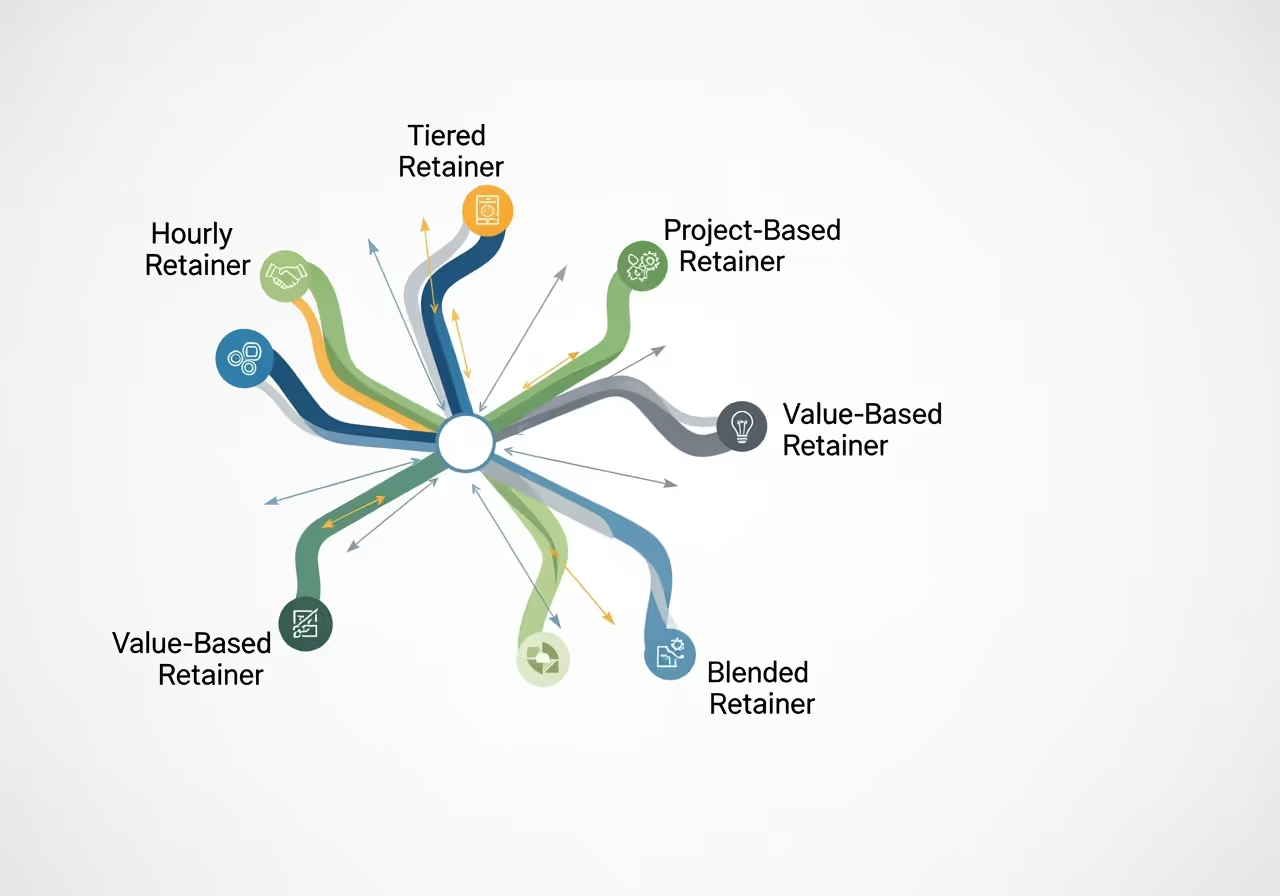
Choosing the Right Type of Contractor Service Retainer Model
Let’s break down the main types. Many successful contractors blend elements to create a custom fit.
- Pay-for-work retainers: The most straightforward model. The client pays a recurring fee for a specific set of services, like seasonal HVAC tune-ups or quarterly drain maintenance. They know what they’re getting, and you know what you’re delivering.
- Pay-for-access retainers: Instead of tasks, clients pay for your availability and expertise. This works well for emergency services or specialized consultation. They are paying for peace of mind and a guaranteed response, which can be highly profitable as it decouples income from hours worked.
- Hybrid models: These combine elements, offering both tangible services and priority access. For example, a retainer could include quarterly electrical inspections plus a discounted call-out rate for urgent repairs.
- Project-based retainers: For large, multi-phase work, spreading payments over time as a retainer creates predictable cash flow for both you and the client.
- Maintenance agreements: This is the natural entry point for most home service contractors. Structuring annual tune-ups or regular system checks as a retainer builds a predictable revenue base. Our work with Bookkeeping for HVAC Companies shows how these agreements strengthen a business’s financial foundation.
How to Price Your Retainer Services
- Calculate your base rate: Start by understanding your operational costs, overhead, and desired profit margin to set your pricing floor.
- Use the 5X value rule: The value you deliver (avoided repairs, peace of mind, etc.) should be at least five times the retainer fee. When clients see this return, price objections fade.
- Factor in overhead: Your retainer income must cover all business costs, including insurance, vehicles, tools, and admin time. If you don’t track these costs, you’re leaving money on the table. This is where Outsourced Accountants Can Help You Find The Profit In Your Company.
- Offer tiered packages: Create Bronze, Silver, and Gold levels with different services and response times. This gives clients choices and creates natural upsell opportunities.
- Avoid hourly commoditization: Price your retainer based on the value and outcomes you provide, not time blocks. Clients aren’t buying hours; they’re buying reliability and expertise. Price accordingly.
Billing ModelPayment StructureClient RelationshipCash FlowBest ForRetainerFixed recurring feeLong-term partnershipPredictable & stableMaintenance, ongoing support, priority accessProject-BasedOne-time payment per projectTransaction-focusedIrregular & unpredictableInstallations, renovations, one-off jobsHourly BillingPay per hour workedShort-term, task-orientedVariable & uncertainSmall repairs, consulting, unclear scope
Building Your Retainer Agreement: From Scope to Signature
A well-crafted retainer agreement is the blueprint for a successful contractor service retainer model. It sets clear expectations, protects both parties, and prevents misunderstandings. A written agreement is non-negotiable; verbal agreements are a recipe for conflict.

A good contract, written in plain language, protects everyone. Your client knows what they’re getting, and you know what you must deliver. It’s the foundation of a healthy business relationship.
Key Components of a Rock-Solid Contract
Your agreement should be clear and specific. Use a checklist to ensure you cover all bases.
- Parties Involved: Full legal names and contact information for your business and the client.
- Service Description (Scope of Work): Be extremely specific about what services are included and, just as importantly, what is not included to prevent scope creep.
- Retainer Fee Schedule: State the fee, payment frequency, due dates, and accepted payment methods. Offering clients several payment platforms helps ensure timely payments.
- Expense Reimbursement: Outline how costs beyond the retainer fee (like parts or materials) will be approved and reimbursed.
- Term and Termination: Specify the agreement’s duration, renewal clauses, and the conditions and notice period required for either party to terminate.
- Relationship and Confidentiality: Explicitly state you are an independent contractor and include clauses to protect any sensitive information shared.
- Dispute Resolution: Outline the process for resolving disagreements, such as mediation or arbitration, to save time and money if conflicts arise.
We recommend using this checklist for retainer agreements and you can view a sample retainer agreement here to see how these elements come together.
How to Negotiate and Sell Your Contractor Service Retainer Model
Selling a retainer is about proposing a long-term partnership, not just a service.
- Transition existing clients: The best time to introduce a retainer is right after a successful project. Use their positive experience as a springboard to discuss ongoing maintenance and priority service.
- Prove value first: With new prospects, start with an initial project to demonstrate your expertise. Once they’ve seen your quality firsthand, the retainer conversation becomes much easier.
- Handle objections by framing it as an investment: Clients may worry about cost or commitment. Focus on the benefits: peace of mind, budget predictability, and reduced downtime. Show them the value, don’t just offer a discount.
- Focus on outcomes, not hours: Your proposal should solve their pain points. Clients don’t buy hours; they buy reliable plumbing, efficient HVAC, and safe electrical systems. Sell the solution and the peace of mind that comes with it.
Effective sales start with effective communication. Our team helps contractors with outbound calls and setting appointments to ensure you’re connecting with the right decision-makers.
Mastering Retainer Management: Best Practices for Success
Once you’ve signed a retainer agreement, you must manage it effectively to ensure client satisfaction and profitability. A well-managed contractor service retainer model is a powerful asset for your company.

Success depends on smooth client onboarding, regular reporting to show value, and diligent time tracking to monitor profitability. You must also manage expectations and prevent scope creep from eating into your margins. Thankfully, technology can handle much of the heavy lifting.
Avoiding Scope Creep and Client Misunderstandings
Scope creep is the silent killer of retainer profitability. It happens when the boundaries of the agreement are not clearly defined or enforced.
- Set clear boundaries: Your contract’s scope of work is your best friend. Refer to it often and ensure your client understands what is and isn’t included.
- Document all requests: Keep a record of all conversations and requests, whether in or out of scope. This creates a paper trail that prevents future misunderstandings.
- Use a change order process: For any work outside the retainer, have a formal process for quoting and getting approval before you begin. Frame it positively: “I can help with that. Since it’s outside our agreement, I’ll send a separate quote.”
- Hold regular check-ins: Monthly or quarterly meetings keep communication open, allow you to review progress, and remind clients of the value you provide.
For plumbing emergencies, clear communication about what’s covered is vital. Our services include Hiring A Customer And Dispatch Service For Plumbing Emergencies to help manage these situations, ensuring your retainer clients get the priority service they expect.
Using Technology to Streamline Retainer Management
Technology makes the contractor service retainer model efficient and scalable.
- CRM software: Track client interactions, service history, and communication to provide proactive, personalized service.
- Project management tools: Oversee tasks and allocate resources to ensure nothing falls through the cracks, especially when managing multiple retainers.
- Time tracking software: Even if you don’t bill hourly, tracking time is essential to understand the profitability of each retainer and inform future pricing.
- Client portals: Streamline communication by giving clients a single place to submit requests, view service history, and access reports.
- Automated billing: Integrate billing with your agreements to reduce admin work, ensure timely payments, and improve cash flow.
With the right tools, you can Use AI to Supercharge Your Contracting Success and manage retainers with unparalleled efficiency, freeing you to focus on expert service.
Frequently Asked Questions about Contractor Retainers
I hear these questions all the time from contractors considering a contractor service retainer model. Let’s tackle the most common concerns with practical answers.
What’s the best way to introduce a retainer model to a one-off client?
The best time is right after you’ve successfully completed a project. Their trust in you is high, and they’ve just experienced your value. Frame the retainer as a way to protect their investment and prevent future problems.
Focus on the benefits of an ongoing partnership: proactive maintenance to avoid emergencies, priority support when they need you, and guaranteed availability. The conversation can be as simple as, “I’m glad we got this sorted out. To keep your systems running smoothly and give you priority access, let’s talk about an ongoing service plan.”
What happens if the client doesn’t use all their retainer hours in a month?
This depends entirely on your agreement, which must be crystal clear from day one. There are a few common approaches:
- “Use it or lose it”: Unused hours don’t carry forward. This works best when the retainer is positioned as paying for access and availability, not a block of time.
- Limited rollover: Allow a certain number of hours to roll over for one or two months. This offers flexibility without creating a large, unmanageable bank of hours for you.
- Value-based structure: The best approach is to structure retainers around outcomes (e.g., quarterly maintenance, priority response) rather than hours. This shifts the focus to the value delivered, which is what clients truly care about.
Whatever you choose, state it clearly in your contract to avoid confusion.
How do I handle work that goes beyond the retainer’s scope?
This is critical for profitability: any work outside the agreed-upon scope must be handled and billed separately. Your retainer agreement should clearly define what’s included. When a client requests something extra—like a new system installation or a major renovation—treat it as a new project.
Immediately clarify that the request falls outside the retainer and provide a separate proposal or bill it at a pre-defined overage rate from your contract. A formal change order process makes this a standard business practice, not a confrontation. Clients who value your expertise will respect these professional boundaries.
Conclusion: Build a More Resilient Contracting Business
The feast-or-famine cycle is stressful and unsustainable. The contractor service retainer model is your path to a predictable, stable, and more valuable business. It allows you to move from reactive repairs to proactive partnerships, creating better outcomes for both you and your clients.
You get the predictable cash flow to plan and grow, while your clients get the peace of mind that comes with priority service from a trusted expert.
But implementing a retainer model adds administrative work: more contracts, regular billing, and constant communication. Many contractors get buried in the back-office tasks required to make retainers successful.
That’s where Contractor In Charge makes the difference. With a solid contractor service retainer model in place, our team can handle your calls, booking, dispatch, and administrative tasks. You’re free to focus on the high-value work that grows your business, confident that your clients are receiving exceptional support.
Our Virtual Customer Service team ensures your retainer clients always feel prioritized, enhancing the value you provide. We’ve lived the challenges of the trades, and we know how to build the stable, thriving business you deserve. It’s time to build long-term stability and create partnerships that matter.