

Answering the Call: Finding the Right Service for Your Buffalo Business


Why Your Buffalo Business Can’t Afford to Miss Another Call
For contracting businesses in Buffalo, NY, every phone call is a potential job—and every missed call is money left on the table. An answering service in buffalo, ny connects you with customers 24/7, captures leads while you’re on-site, and ensures no emergency goes unanswered. It acts as your virtual front desk, handling everything from after-hours support to appointment scheduling, so you can focus on the work that matters.
Quick Overview: What an Answering Service Does for Buffalo Contractors
- 24/7 Live Answering – Never miss a call, even during nights, weekends, and holidays
- Appointment Scheduling – Book jobs in real-time while you’re working
- Emergency Dispatch – Route urgent calls to the right technician immediately
- Message Taking & Screening – Filter calls and relay information promptly
- Bilingual Support – Serve Buffalo’s diverse customer base
- Cost Savings – Avoid hiring full-time receptionists while maintaining professional service
The reality is that 80% of callers who reach voicemail don’t leave a message. In a service-driven economy like Buffalo’s, accessibility is essential. Harsh winters mean heating emergencies can’t wait, and homeowners expect an immediate response when their basement floods or the power goes out. Poor phone communication can cause 71% of customers to end a business relationship.
For home service contractors juggling job sites, supply runs, and crew management, answering every call yourself isn’t realistic. That’s where a reliable answering service comes in. It handles the calls, you handle the work, and your customers get the responsiveness they expect.
I’m Anna Lynn Wise. After 15 years running a plumbing and HVAC company, I know how critical a dependable answering service is for handling trade-specific, urgent calls. At Contractor In Charge, we help contractors across the country, including in Buffalo, NY, streamline customer communication. We’ve seen how a reliable answering service in buffalo, ny allows you to focus on growing your business.
The Core Benefits of Partnering with an Answering Service in Buffalo, NY
For a contracting business in Buffalo, keeping customers happy and growing your business is what matters. How you answer the phone is everything. Consider this: 71% of customers will leave a business due to poor phone communication. For busy contractors, that’s a sobering reality. A professional answering service in buffalo, ny is the solution, delivering improved customer service, a more professional image, and increased efficiency. It lets you focus on your trade while ensuring callers get real help. Our tradespecialized Answering Service understands the unique demands of home service contractors.
Boost Customer Satisfaction and Loyalty
Imagine a homeowner’s basement is flooding at 2 AM. They call your number and get voicemail. They immediately call the next plumber on the list. You’ve lost a customer. Now, imagine a live, friendly operator answers within seconds, understands the emergency, and reassures them help is on the way. That’s the difference between a missed opportunity and a loyal customer.
An answering service in buffalo, ny means never missing a call—not during lunch, not when you’re deep in a repair, and definitely not at 2 AM. This 24/7 availability creates a positive first impression and gives customers the immediate response they need. The human interaction matters; people want to talk to people, especially when stressed about a home emergency.
That kind of consistent, caring service builds customer satisfaction and loyalty that keeps people coming back. Our 24-Hour Live Answering Service ensures you’re always there for your customers, even when you physically can’t be.
Drive Business Growth and Revenue
Every call is potential revenue. An answering service acts as your lead capture system, ensuring every inquiry is recorded and qualified. Our trained operators handle appointment scheduling in real-time, booking jobs while you work. They qualify leads, gather details, and route urgent calls, giving you a competitive advantage in Buffalo’s home services market. While competitors miss calls, you capture every opportunity. The service scales with your business, eliminating the need to hire more office staff.
Outsourcing call handling lets you focus on core operations—the work that generates revenue. By letting experts handle calls, you’re free to do what you do best. Learn more about how Outsourcing Lets You Focus on What You Do Best.
Improve Financial Efficiency
Hiring a full-time receptionist involves a salary, benefits, payroll taxes, and training. When they’re sick or on vacation, your phones may go unanswered. An answering service in buffalo, ny offers a more cost-effective solution. It provides efficient resource allocation without the overhead of a full-time employee. You pay only for the services you use, with no training costs or employee benefits. This model eliminates wasted payroll during slow periods and provides reliable phone coverage at a fraction of the in-house cost. The savings can be redirected into growing your business.
For contractors looking to streamline their back office, our Virtual Office Services for Contractors takes this efficiency even further.
What Can a Professional Answering Service Do for You?
A professional answering service in buffalo, ny is more than just someone picking up the phone; it’s a comprehensive extension of your business. It offers customizable solutions that integrate with your operations, acting as a dedicated team without the overhead. Using advanced technology and personal attention, the right provider ensures every interaction reflects your brand. These services adapt to your workflows, from handling inquiries to managing complex dispatching. The difference between a basic call center and a true partner is the depth of integration and industry expertise. We explore this in our article: How Do Answering Services Differ From a True Customer and Dispatch Service Company?.
24/7/365 Live Answering
Emergencies don’t follow business hours. A burst pipe at 2 AM or a furnace failure on Christmas won’t wait. That’s why 24/7/365 live answering is essential for home service contractors. With live operators, your business is always accessible, providing after-hours support, holiday coverage, and weekend availability. Emergency calls get immediate attention from trained operators who understand the urgency. This constant availability provides peace of mind, knowing customers will always reach a real person. For plumbing contractors, we’ve outlined how this works in our guide to After Hours Answering Service for Plumbers.
Virtual Receptionist and Administrative Tasks
A virtual receptionist provides the support of an in-house team without the limitations. These trained professionals handle key administrative tasks, including: Call screening to filter spam, detailed message taking delivered how you prefer, and real-time appointment scheduling integrated with your calendar. A key function is lead qualification, where operators ask targeted questions to identify ready-to-book prospects. They can also make outbound calls for reminders and follow-ups. This support allows your team to focus on core work without interruptions from the phone. Learn more about enhancing customer interactions on our Virtual Customer Service page.
Specialized Dispatching Services
For contractors, effective dispatching is the difference between a profitable day and a chaotic one. An answering service in buffalo, ny with dispatching capabilities becomes your operations command center. Emergency dispatch ensures urgent calls reach the right technician immediately. When a customer calls about no heat on a frigid Buffalo night, the operator contacts the on-call technician right away. Technician coordination keeps your field team informed with job specifics and customer information.
Real-time updates keep everyone in the loop with immediate notifications. On-call schedule management via secure portals means your answering service always knows who is available, eliminating confusion. This specialized approach ensures your operations run smoothly, your customers get prompt service, and you maintain control without being glued to your phone. For a comprehensive look at these capabilities, visit our page on Contractor Dispatching Service.
Key Industries in Buffalo Benefiting from Answering Services
Buffalo’s economy is diverse, with strong healthcare, manufacturing, and service sectors. The local weather, from brutal winters to steamy summers, creates constant, urgent demand for services that can’t wait. Each industry has unique communication challenges, from emergency response for contractors to client confidentiality for legal and medical practices. In Buffalo’s service-driven economy, how an incoming call is handled often determines whether a customer is won or lost. A professional answering service in buffalo, ny understands these industry-specific needs and adapts to meet them.
Why Home Service Contractors Need an Answering Service in Buffalo, NY
For plumbers, electricians, and HVAC techs in Buffalo, emergencies are a constant. A homeowner with a burst pipe at 2 AM won’t wait for business hours; they’ll hire whoever answers first. Plumbing emergencies, HVAC system failures, and electrical hazards all demand an immediate response that a voicemail can’t provide. This is why a professional answering service in buffalo, ny is so beneficial. While you’re on a job or asleep, trained operators capture calls, schedule jobs, and dispatch technicians based on urgency. You never miss a customer, and clients feel cared for around the clock.
Beyond emergencies, an answering service manages the chaos of daytime job scheduling, freeing you to focus on technical work while ensuring every caller gets a professional response. For electrical contractors, our Electrician Answering Service is designed to handle the unique urgency of their calls.
Medical and Healthcare Practices
Medical practices in Buffalo face unique communication challenges, from handling sensitive patient data to managing on-call physicians. HIPAA compliance is non-negotiable; a specialized answering service ensures all communications are secure and encrypted. Key services include efficient patient intake, appointment reminders to reduce no-shows, and critical on-call doctor routing for after-hours concerns. Operators trained in medical call handling can assess urgency and follow practice protocols precisely. In healthcare, compassionate communication is vital, as patients are often worried or in pain. An answering service helps maintain the high standard of care patients expect, even when the office is closed.
Legal, Real Estate, and Other Professional Services
For professional service providers in Buffalo like law firms and real estate agencies, first impressions are critical. New client screening helps law firms pre-qualify potential clients, saving valuable time, while ensuring confidentiality protects sensitive information. For real estate professionals, an answering service can manage complex appointment setting for property viewings and handle property inquiries promptly. In every interaction, maintaining a high degree of professionalism builds your brand’s reputation and client trust.
An answering service in buffalo, ny that understands professional services helps you project a polished, reliable image while streamlining your operations. Every inquiry is handled with the professionalism your clients expect, building trust and keeping your schedule organized.
How to Choose the Right Answering Service for Your Buffalo Business
Choosing the right answering service in buffalo, ny is a critical decision. You’re not just hiring a call taker; you’re choosing a partner to represent your brand and interact with your customers. Every call they answer reflects on your business. View it as a partnership that should understand your industry, adapt to your workflow, and scale with your growth. Before comparing providers, it’s important to know what to ask. Our resource covers the essentials: 4 Questions You Need to Ask an Answering Service.
What to Look for in an Answering Service in Buffalo, NY
When evaluating providers, look for one that understands Buffalo’s local market and your specific needs. Key factors include:
- Industry specialization: Operators should know your trade, whether it’s understanding a plumbing emergency or the urgency of an HVAC failure in January.
- Scalability: The service must handle call spikes during busy seasons and grow with your business.
- Modern technology integration: Ensure they can sync with your existing CRM and scheduling software to reduce manual work.
- Custom scripting: The service should use scripts that reflect your brand’s voice, ensuring a consistent customer experience.
For more guidance, our resource on Choosing the Right Answering Service walks you through the process.
Essential Features and Capabilities
Dig deeper into the features that separate good services from great ones.
- Bilingual operators are invaluable in a diverse city like Buffalo, opening your business to a broader market.
- Secure messaging is non-negotiable for industries handling sensitive data, ensuring HIPAA compliance and data protection.
- CRM integration automates logging customer interactions, saving time and reducing errors.
- Detailed reporting on call volume and response times provides insights to make smarter business decisions.
- A disaster recovery plan ensures your calls are always answered, even during outages or severe weather.
At Contractor In Charge, we’ve built our service around these principles. As industry veterans, we understand the challenges contractors face. We combine smart technology with genuine customer care from real people who understand your trade.
Frequently Asked Questions about Answering Services
As you consider an answering service in buffalo, ny, you likely have questions. These are the most common questions we hear from contractors, with straightforward answers based on how a professional service works.
How does an answering service work?
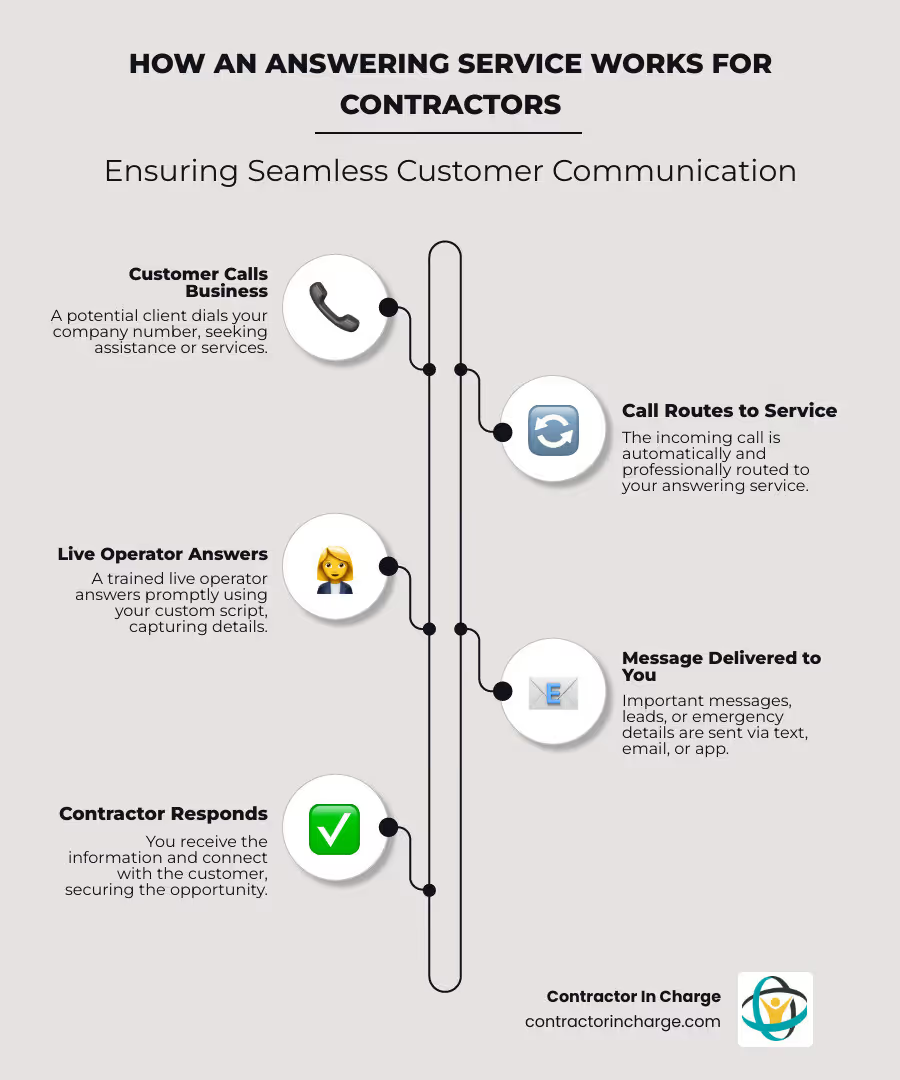
You forward your business line to the answering service, which can be done 24/7, after hours, or on demand. When a call comes in, a live operator answers using a custom script developed with you. This script guides the operator in gathering information, screening calls, scheduling appointments, or dispatching emergencies according to your protocols. Operators are trained to have natural conversations while capturing key details. After the call, the message is delivered immediately via your preferred method—text, email, or a secure portal. You get real-time notifications, keeping you in the loop and able to respond quickly.
Can an answering service sound like they are part of my company?
Yes, that’s the goal. A professional answering service in buffalo, ny should be indistinguishable from your in-house team. This is achieved through customization. We work with you to develop custom greetings and scripts that reflect your brand’s personality and communication style. Our operators are trained on your specific services, service area, and call-handling preferences. Many services, including ours, assign dedicated agents to clients. These agents become familiar with your business, technicians, and even regular customers, resulting in a seamless experience where callers believe they’re speaking directly with your company.
How quickly are calls answered?
Speed is critical, as 80% of callers sent to voicemail hang up and call a competitor. A quality answering service prioritizes fast pickup times, typically within a few rings. At Contractor In Charge, our average pickup is on the second ring, with an average queue time of just 20 seconds. Your customers connect with a live person almost immediately. Reputable services often provide Service Level Agreements (SLAs) that guarantee specific response times. For a homeowner with an emergency, those seconds matter. A quick response improves customer satisfaction and directly impacts whether you win the job.
Conclusion: Never Miss a Call, Never Miss an Opportunity
For home service contractors in Buffalo, NY, a missed call isn’t just a lost opportunity—it’s a customer in distress who couldn’t get help. Customer communication is the lifeline of your business. An answering service in buffalo, ny ensures you are there for every customer, at any hour, even when you’re on a job or off the clock.
As we’ve covered, a professional answering service boosts customer satisfaction, drives revenue, and improves financial efficiency by providing the 24/7 accessibility that Buffalo’s climate demands. In today’s market, being accessible is essential. Your customers expect an immediate response, and your business deserves every chance to grow without the stress of constantly managing incoming calls.
At Contractor In Charge, we understand these pressures. Founded by an industry veteran, our service was built specifically for contractors. We offer a dedicated team that combines modern technology with genuine customer care. We know your industry’s language, your challenges, and your customers’ expectations.
Gaining a competitive edge in Buffalo means never leaving a customer hanging. Ready to lift your customer communication and focus on what you do best? Learn more about how we can help at Contractor In Charge’s Answering Service.