

The Contractor’s Scorecard: KPIs You Need to Track and Report


Why Tracking the Right Numbers Changes Everything
Industry kpi reporting contractor systems measure financial health, project performance, and operational efficiency. The best approach is to start with 3-5 core KPIs aligned to your business goals and expand as you build reporting habits.
Quick-Start KPI Framework for Contractors:
KPI CategoryWhat to TrackWhy It MattersFinancialProfit margin, cash flow, working capitalShows if you’re actually making moneyProjectCost variance, schedule performanceCatches budget overruns earlyOperationalLabor downtime, rework rateReveals hidden inefficienciesSafetyIncident rate, safety meetingsReduces liability and insurance costs
Most contractors run on gut feel, looking at the bank account and hoping for the best. But two jobs with similar revenue can have vastly different outcomes; one might be profitable while the other bleeds cash. In fact, 43% of construction firms prioritize immediate financial goals over organizational resilience, missing warning signs in their current projects.
This is where Key Performance Indicators (KPIs) become your business health check. Like vital signs, they tell you what’s working and what needs attention before small problems become disasters. The difference between a 2% and a 10% profit margin often comes down to which numbers you watch.
KPIs are critical for home services contractors juggling multiple jobs, crews, and emergencies. I’m Anna Lynn Wise, CEO of Contractor In Charge, and after 25 years in the industry—including owning my own plumbing, HVAC, and remodeling company—I know that tracking the right metrics is what separates sustainable growth from constant firefighting. We help contractors bridge the gap between fieldwork and financial clarity with effective industry kpi reporting contractor systems.
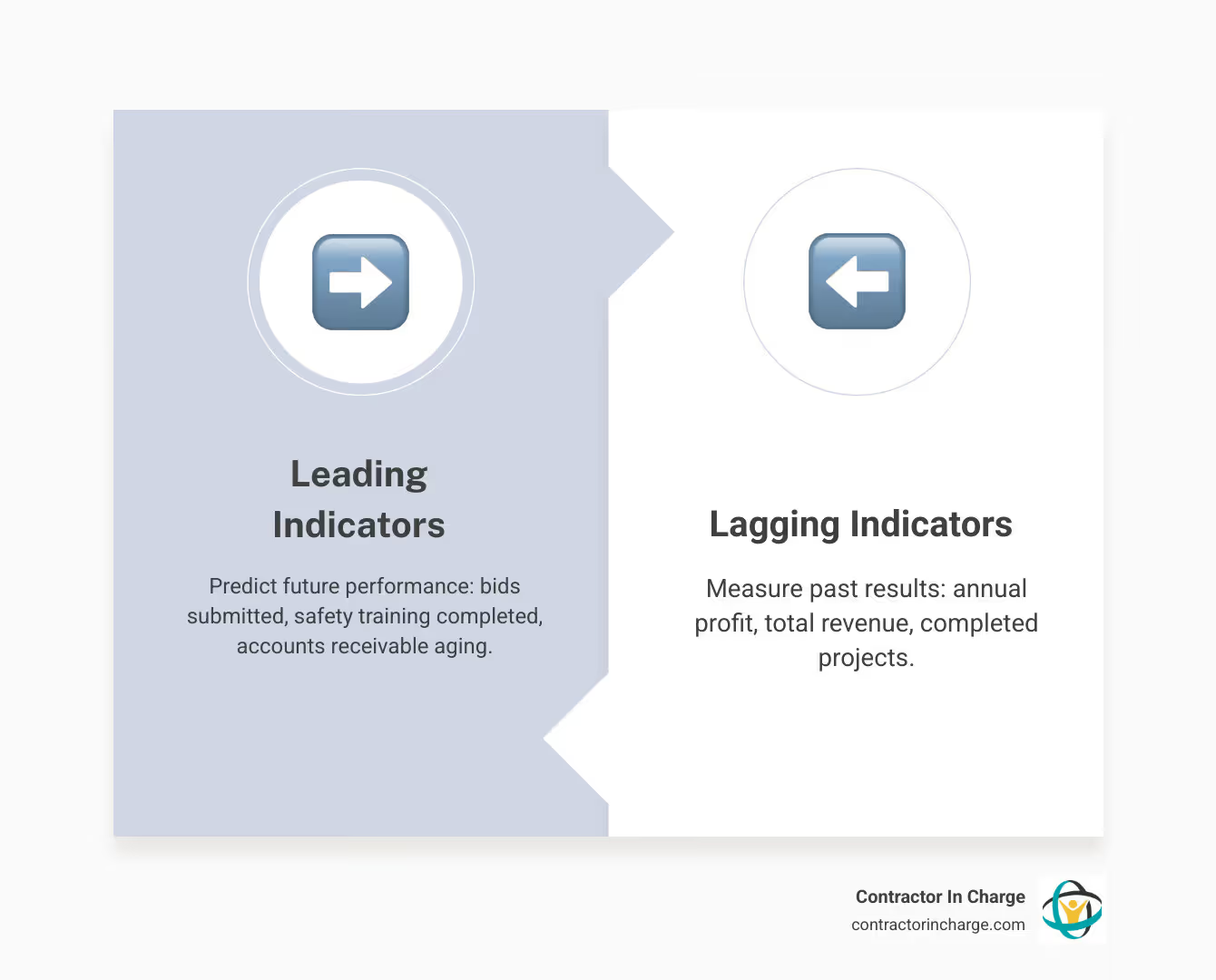
Leading indicators predict future performance (bids submitted, safety training) while lagging indicators measure past results (annual profit, total revenue). The strongest businesses track both to understand where they’ve been and where they’re headed.
Why KPIs are a Contractor’s Best Friend
You finish a big project and think it went well, only to find the final profit is nowhere near what you expected. This is exactly why industry kpi reporting contractor systems are so valuable—they turn painful surprises into predictable outcomes.
Instead of hoping a job is profitable, you’ll know whether you’re on track while there’s still time to fix problems. The truth is, 43% of construction firms prioritize immediate financial goals over long-term resilience, missing warning signs on current projects. KPIs provide an objective view of what’s actually happening, not just what you hope is happening.
Running a business without KPIs is like driving without a fuel gauge or speedometer. Yet many contractors run six-figure businesses without knowing their real profit margins or which jobs are bleeding money. Tracking the right numbers lets you catch issues early. A project that’s 15% over budget in week two can be corrected; by week ten, it’s too late.
As the Construction Financial Management Association notes, tracking KPIs helps companies build long-term resilience while hitting short-term targets. KPIs improve decision-making, make financial planning more accurate, and help you develop stronger business strategies by revealing patterns across jobs and seasons. Your bid accuracy improves, resource allocation becomes smarter, and operational efficiency jumps when you identify bottlenecks early. Most importantly, good metrics help you mitigate financial risks before they sink a project—or your company.
Securing Financing and Surety Bonds
Getting banks and surety companies to approve financing or bonds can be frustrating. They don’t care about your reputation; they care about numbers that prove financial stability and responsible management.
This is where solid industry kpi reporting contractor practices are a secret weapon. Metrics like your quick ratio, working capital, and Work-in-Progress (WIP) schedules tell the story lenders need to hear. A WIP report shows where each project stands relative to its budget and timeline, proving you manage work profitably.
Sureties use KPIs as direct indicators of your ability to fulfill obligations, and banks rely on them to assess credit risk. When you present clear, accurate financial KPIs, you build trust, which leads to better rates and higher bonding capacity.
Improving Bid Accuracy and Profitability
Most contractors have underbid a job that haunted them for months. The problem isn’t bad estimating; it’s estimating based on assumptions instead of data from past projects.
KPIs transform bidding from guesswork to precision pricing. By analyzing past project costs—especially actual vs. planned labor hours—you spot patterns. Maybe renovations take 20% longer than new builds, or a certain crew is more efficient.
Cost variance analysis compares actual costs against your budget. When you go over, you can dig into why: poor planning, unexpected site conditions, or untracked change orders? Change orders can destroy profitability if not managed well. Tracking their frequency and impact helps you tighten your process and protect margins.
This level of detail is what we call performance accounting—going beyond basic bookkeeping to understand what truly drives profitability. When you know your numbers this well, your bids become accurate and your profits predictable.
The Core Four: Financial KPIs Every Contractor Must Track
Financial KPIs are the pulse of your business, revealing whether you’re truly profitable or just busy. Industry kpi reporting contractor systems use these metrics to break down overall profit into trackable insights, offering clarity on monetary performance. As we mentioned in Key KPIs in Your Plumbing Business, these are indispensable for evaluating financial health and ensuring long-term profitability. Let’s dive into the core four.
1. Profit Margin (Gross and Net)
Profit margins tell you how much money you actually keep. The average construction profit margin is around 6%, but can range from 2% to 10%.
- Gross Profit Margin: Shows the profitability of individual jobs. It’s calculated as
(Revenue - Cost of Goods Sold) / Revenue. COGS includes direct costs like labor and materials. A high gross margin indicates efficient job delivery. - Net Profit Margin: Reflects overall business profitability after all expenses (including overhead) are paid. It’s calculated as
(Revenue - All Expenses) / Revenue.
Tracking both helps you see if individual projects are efficient and if your overall business is sustainable. A declining gross profit on a project, or “profit fade,” signals mismanagement that needs immediate attention.
2. Cash Flow
In contracting, cash is king. Projects often require significant upfront spending on materials and permits before you receive payment, making cash flow management vital.
- Positive Net Cash Flow: More cash is coming in than going out—the ideal scenario.
- Negative Net Cash Flow: You’re spending more than you’re bringing in. While sometimes acceptable during growth phases, persistent negative cash flow can signal issues with collection activities or poor financial planning.
Monitoring cash flow ensures you can cover payroll and other operational needs. A project can be profitable on paper but still stall your business if you don’t have the cash to pay your bills.
3. Working Capital
Working capital is a powerful indicator of your short-term financial health and liquidity. It tells you if you have enough funds to cover immediate obligations.
- Working Capital Formula:
Current Assets - Current Liabilities
Positive working capital is your buffer, ensuring you can cover upfront project costs without borrowing. A current ratio (Current Assets / Current Liabilities) above 1 suggests good liquidity. Negative working capital means you can’t cover current bills and requires urgent action.
4. Revenue Growth Rate
This KPI measures how quickly your business is expanding, indicating market demand and the effectiveness of your sales efforts.
- Calculation: Compare total revenue from one period to a previous one (e.g., this quarter vs. last quarter). A jump from $500,000 in Q1 to $600,000 in Q2 is 20% growth.
Tracking revenue growth helps you spot slowdowns and adjust your strategy. Consistent growth indicates a healthy market position, while a dip prompts investigation into market changes or internal issues.
Beyond the Bottom Line: A Guide to Industry KPI Reporting for Contractors
Financial KPIs provide the big picture, but a truly effective industry kpi reporting contractor system goes deeper. Knowing you made money is great, but why did you make it, and can you repeat that success? A holistic view means tracking project efficiency, job site safety, and work quality. Focusing only on profit and loss misses the operational realities that drive success or drain resources. For more on this, see our insights on Operations.

Operational & Project Management KPIs
These metrics show what’s happening on the ground and whether projects are running smoothly.
- Cost Performance Index (CPI): Measures cost efficiency (Earned Value / Actual Cost). A CPI below 1 means you’re over budget.
- Schedule Performance Index (SPI): Measures timeline efficiency (Earned Value / Planned Value). An SPI below 1 means you’re behind schedule.
- Change Order Frequency: Scope creep kills profitability. Tracking how often clients add “just one more thing” helps you identify needs for better contracts or clearer communication.
- Rework Rate: The percentage of work done twice is a painful metric. High rework rates waste labor and materials and suggest quality issues.
- Labor Downtime: Measures non-productive time for crews waiting on materials or instructions. Reducing this directly boosts profitability.
- Planned vs. Actual Hours: Comparing estimated hours to actual hours helps refine future bids and prevent underbidding.
Safety & Quality KPIs
A safe job site is good business. Accidents cost money, time, and trust. Tracking safety is non-negotiable.
- Incident Rates (TRIR & LTIFR): The Total Recordable Incident Rate and Lost Time Injury Frequency Rate measure workplace accidents. Lower rates mean lower insurance premiums and higher morale.
- Number of Safety Meetings: Shows a commitment to a proactive safety culture where hazards are addressed before they cause problems.
- Defect Rate: The number of punch list items per project reveals execution quality. A low defect rate means fewer callbacks and happier clients.
- Inspection Pass Rate: Passing inspections on the first try reflects quality craftsmanship and understanding of codes. Failing costs time and credibility.
The Role of Industry KPI Reporting in Mitigating Risk
Construction is full of risk, from weather to price fluctuations. An industry kpi reporting contractor system transforms how you handle these challenges by providing early warning signals.
Instead of waiting for problems to explode, you can spot a project sliding off track while there’s still time to intervene. As industry sources note, while financial metrics are “backward-looking,” real-time operational KPIs predict where you’re headed. This proactive approach prevents budget overruns and schedule slippage. With>Implementing Your KPI Reporting System
Knowing why KPIs are crucial is the first step. Now, how do you put them into practice without getting overwhelmed? Implementing an industry kpi reporting contractor system should be a strategic process, not another full-time job. The secret is to start small, build habits, and expand gradually. For a look at your business’s overall direction, see our guidance on Strategy.

Choosing the Right Metrics for Industry KPI Reporting
First, select KPIs for your business. Not every number deserves daily attention. As KPI.org explains, KPIs measure how well a business is doing against its objectives, but the right ones depend on your unique situation.
Start with just 3-5 KPIs that address your most pressing goals. This keeps the data manageable and actionable. The best KPIs are SMART: Specific, Measurable, Achievable, Relevant, and Time-bound. For example, instead of a vague goal like “improve profitability,” aim to “increase net profit margin from 4% to 6% within six months.” Avoid vanity metrics that look impressive but don’t offer actionable insights, like pipeline value without considering your conversion rate.
Tools and Technology for Tracking KPIs
Gone are the days of binders and dense spreadsheets, which led to lost paperwork and no real-time updates. Today’s construction management tools centralize data, auto-generate reports, and provide real-time dashboards.
Modern industry kpi reporting contractor software offers visual dashboards that make complex data easy to understand. Automated alerts notify you immediately if a project is trending over budget—not weeks later. The best systems integrate with your existing accounting and management software, improving efficiency and reducing human error. While spreadsheets can be a starting point, they are prone to errors. If you spend more time fighting formulas than using insights, it’s time to upgrade.
Navigating the Challenges of KPI Implementation
Implementing KPIs comes with challenges. Here’s how to steer them:
- Data Overload: Don’t track everything. Start with 3-5 impactful KPIs to avoid “analysis paralysis,” where too much information leads to inaction.
- Inaccurate Data: “Garbage in, garbage out.” If your team rushes timesheets or guesses at costs, your KPIs will be misleading. Standardize data collection and train your team on why accuracy matters—it helps you bid more competitively, which means more work for everyone.
- Lack of Action: Data is useless if you don’t act on it. Establish a rhythm for reviewing KPIs—weekly for project metrics, monthly for financial overviews—and make decisions based on what you find.
- Employee Resistance: Change is hard. Gain buy-in by explaining the “why.” Show how better planning from KPIs leads to fewer last-minute schedule changes or how hitting profit targets can lead to bonuses. Involve your team in the process to foster genuine buy-in.
Frequently Asked Questions about Contractor KPI Reporting
How do you measure a contractor’s performance?
A contractor’s performance is measured with a mix of KPIs across four key areas. This holistic approach provides a full picture of business health.
- Financial KPIs: Profit margin and cash flow show if the business is making money.
- Operational KPIs: Cost variance and schedule adherence measure project efficiency.
- Safety KPIs: Incident rates track job site safety and liability.
- Quality KPIs: Defect rates and inspection pass rates indicate the quality of work.
This comprehensive view, central to industry kpi reporting contractor systems, helps identify areas for improvement and ensures predictable, successful outcomes.
What is the difference between financial and operational KPIs?
Think of it this way: financial KPIs tell you if you’re making money, while operational KPIs tell you how efficiently you’re doing the work.
Financial KPIs (e.g., net profit margin, working capital) measure the overall monetary health and stability of your business. They are the bottom-line results found in your accounting system.
Operational KPIs (e.g., labor downtime, rework rate, CPI) measure the efficiency of your day-to-day fieldwork. They reveal bottlenecks and show if projects are being executed well. The strongest industry kpi reporting contractor systems track both, as you need operational efficiency to drive financial success.
How often should a contractor review their KPIs?
The review frequency depends on the KPI.
- Monthly or Quarterly: Review high-level financial KPIs like overall profit margin and revenue growth. These reflect long-term trends and align with standard financial reporting cycles.
- Weekly or Daily: Monitor project-specific operational KPIs like budget vs. actual costs, schedule progress, and labor productivity. These require frequent attention to catch problems early.
Waiting a month to find out a project is over budget is too late. Real-time dashboards and alerts are invaluable for daily and weekly check-ins, allowing you to take immediate corrective action while using monthly reviews for big-picture strategy.
bookkeeping and administrative support designed for contractors. While you build your business, we manage the numbers behind the scenes, ensuring your KPIs are accurate and insightful.
You don’t need to be an accountant to succeed. You just need the right information at the right time. Let us handle the data so you can focus on turning it into dollars.