

Agreement Achieved: How to Get the Best Support for Your Service Contracts

Why Service Agreement Management Support Matters for Your Bottom Line
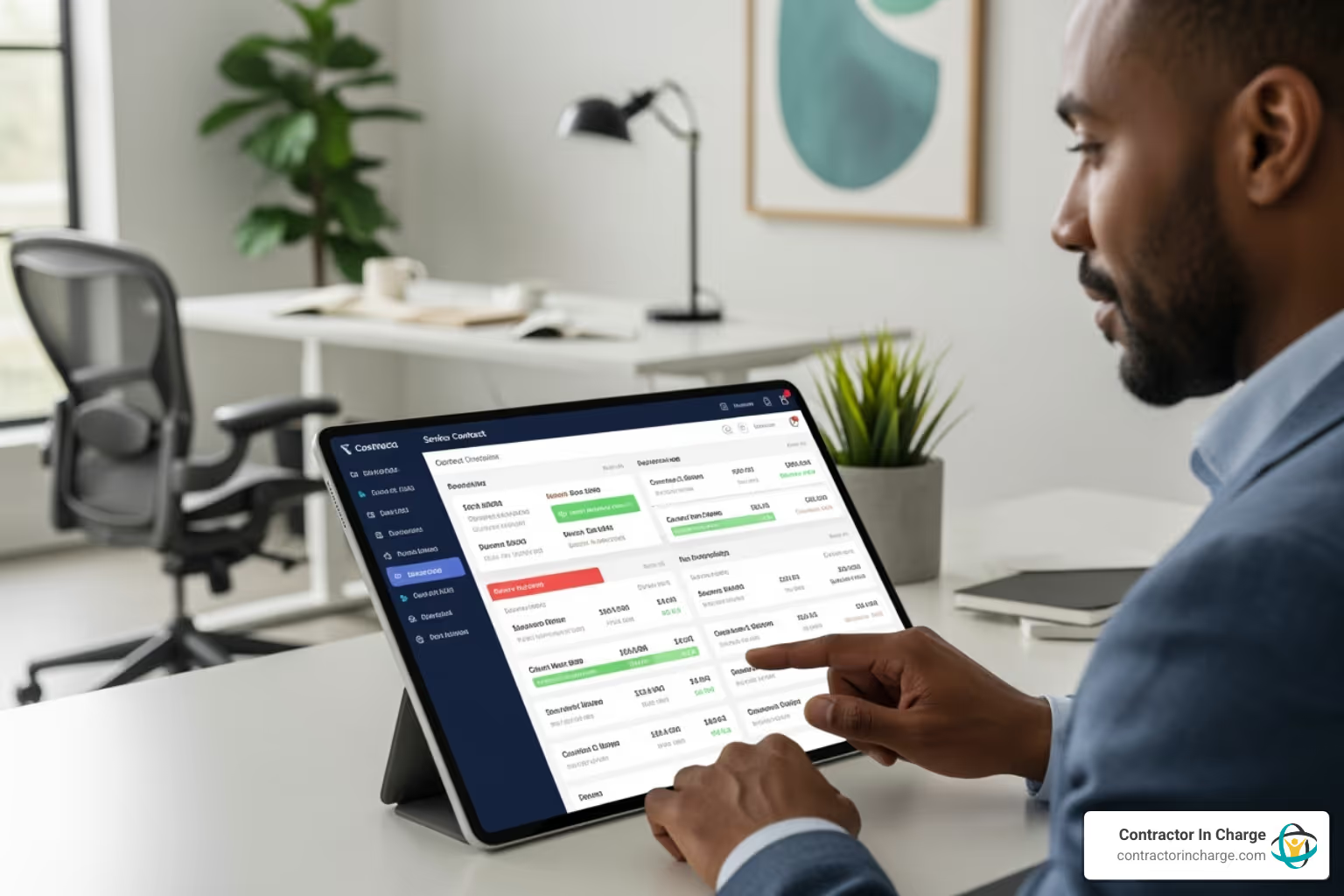
Service agreement management support streamlines how contractors create, track, and renew service contracts, saving time and securing reliable recurring revenue. If you’re managing agreements with spreadsheets and sticky notes, you’re leaving money on the table. Effective support delivers:
• Centralized contract tracking – All agreements in one accessible location
• Automated renewal reminders – Never miss another contract expiration
• Integrated billing and invoicing – Seamless payment collection for recurring services
• Scheduled maintenance automation – Service visits triggered without manual intervention
• Customer equipment tracking – Complete service history at your fingertips
• Performance reporting – Clear visibility into contract profitability
Service agreements are the foundation of successful business relationships, but without proper support, managing them becomes costly. Missed renewals mean lost revenue, manual tracking leads to billing errors, and disorganized records frustrate everyone.
The good news is that the right support system can automate scheduling, streamline invoicing, and help you deliver reliable service that improves customer retention. Smart management systems bring scheduling, invoicing, and equipment tracking into one seamless workflow, helping you optimize operations while your team focuses on the work that makes you money.
I’m Anna Lynn Wise, CEO of Contractor In Charge. With over 30 years in the home service industry, including owning a plumbing, HVAC, and remodeling company, I’ve seen these challenges firsthand. I founded Contractor In Charge to provide the service agreement management support that helps contractors grow without the backend burden.

The Foundation: What Every Contractor Must Know About Service Agreements
Think of a service agreement as the blueprint for your business relationships—a contract that spells out what you’ll do, when, and for how much. These agreements are the foundation that keeps your business running smoothly and your customers happy by setting clear expectations for everyone.
A well-written service agreement sets clear expectations, provides a roadmap for handling problems, and creates a scorecard to measure performance. The Guideline on Service Agreements: Essential Elements confirms these functions are key to effective contracts.
Without proper service agreement management support, even the best contracts can become a liability. You need systems to track, execute, and renew these agreements without drowning in administrative work.

Key Differences: SA vs. MSA vs. SLA
It’s important to understand the difference between a Service Agreement (SA), a Master Service Agreement (MSA), and a Service Level Agreement (SLA).
• A Service Agreement (SA) is a standalone contract for a specific job or service period, like a one-year HVAC maintenance plan. It contains all the necessary details for that single engagement.
• A Master Service Agreement (MSA) is a broader framework governing your entire relationship with a client, often used for commercial customers. It sets the general rules (confidentiality, payment policies, etc.), allowing you to create individual service orders without renegotiating terms each time.
• A Service Level Agreement (SLA) defines specific, measurable performance metrics. It details response times, uptime guarantees, and penalties for not meeting those standards. SLAs are crucial for commercial clients where downtime costs money.
Most residential customers need a straightforward SA, while commercial clients often benefit from an MSA with embedded SLAs. The key is matching the agreement to the complexity of the work.
Essential Clauses for Your Service Agreements
A solid service agreement protects both you and your customer. Based on guidance from resources like the Services Agreement (Pro-Service Provider) | Practical Law, here are the clauses every agreement should include:
• Parties involved: Full legal names and addresses for your company and the customer.
• Scope of work: A detailed description of services provided and, just as importantly, what is not included to prevent scope creep.
• Payment terms: Clear pricing, payment schedules, accepted methods, and any late fees.
• Term and termination: The agreement’s duration and the conditions for ending it, including notice periods.
• Dispute resolution: The process for handling disagreements (e.g., mediation, arbitration) and the governing state law.
• Confidentiality: Protects sensitive information for both parties.
• Warranties and indemnification: Your service guarantees and who is responsible if something goes wrong.
• Limitation of liability: Caps the financial responsibility of either party in case of unforeseen issues.
• Force majeure: Addresses uncontrollable events (like pandemics or natural disasters) that may prevent service delivery.
• Insurance requirements: Specifies the necessary insurance coverage for both parties.
Additional clauses might cover intellectual property, subcontracting permissions, and other specific obligations. The goal is clarity, not complexity. When paired with effective service agreement management support, these clear agreements drive recurring revenue and customer satisfaction.
The Manual Mess vs. Supported Success
Are you managing service agreements with stacks of folders, confusing spreadsheets, and sticky notes? This manual approach isn’t just frustrating—it’s expensive. Every missed renewal is lost revenue, every billing error is an awkward phone call, and every scheduling mix-up is a disappointed customer.
The manual mess looks like this: inconsistent spreadsheets, scattered paper contracts, and renewal dates on calendars that get thrown away. The result is lost revenue, billing errors, frustrated clients, and an administrative burden that steals time from profitable work.
Now, imagine this: every service agreement is organized in one place. Renewal reminders and invoices go out automatically. Maintenance visits appear on your technicians’ calendars without manual entry. That’s supported success with proper service agreement management support. It’s the difference between drowning in paperwork and running a smooth, profitable operation. When you centralize contract tracking and automate reminders and billing, your team can stop chasing information and start delivering exceptional service.
Common Pitfalls of Manual Contract Tracking
Manual tracking hurts your business in several ways:
• Missed renewal dates: This is a silent profit killer. Contractors can lose 10-15% of service agreement revenue simply by forgetting to follow up before a contract expires.
• Inaccurate customer data: When information is scattered, it’s never current. This leads to billing the wrong amount, using old contact information, or showing up for unscheduled visits.
• Inconsistent service delivery: Without scheduling tied to contracts, maintenance visits become haphazard. Customers lose faith when preventative maintenance is missed and equipment breaks down.
• Billing errors: Manual invoicing is prone to mistakes. Forgetting to send a bill, miscalculating an amount, or failing to track payments creates tension and hurts cash flow.
• Compliance risks: Manual systems make it nearly impossible to verify compliance with industry regulations, putting your business at risk during an audit.
How Contractor In Charge Transforms Your Workflow
At Contractor In Charge, we solve these problems because we’ve experienced them firsthand. Our service agreement management support combines smart technology with dedicated human support.
• Centralized data: Everything lives in one secure, cloud-based system—agreements, customer details, and equipment history—accessible to your office staff, technicians, and you, anytime.
• Automated scheduling: Our system automatically schedules recurring appointments for the entire year, eliminating repetitive tasks and ensuring consistent service. This is how we help you achieve Elevating Efficiency.
• Proactive renewal reminders: We track every expiration date and send automated reminders to you and your customers, protecting your recurring revenue and creating positive touchpoints.
• Integrated invoicing: Agreements automatically trigger invoices based on your terms. Payments are tracked, and late notices are sent automatically, ensuring a reliable income stream.
• Comprehensive equipment tracking: We maintain a complete history for every piece of customer equipment—installation, service visits, repairs, and parts. Your technicians arrive with full context, improving efficiency and service quality.
Our support team becomes an extension of your business. When your team stops fighting administrative chaos, they can focus on what matters: quality service, customer relationships, and growing your business. As we explore in our article on how to Use AI to Supercharge Your Contracting Success, the future lies in letting smart systems handle routine tasks.
Core Components of Effective Service Agreement Management Support
A robust service agreement management support system is more than just software; it’s a comprehensive toolkit that covers the entire agreement lifecycle. At Contractor In Charge, we’ve built our service around these core components.
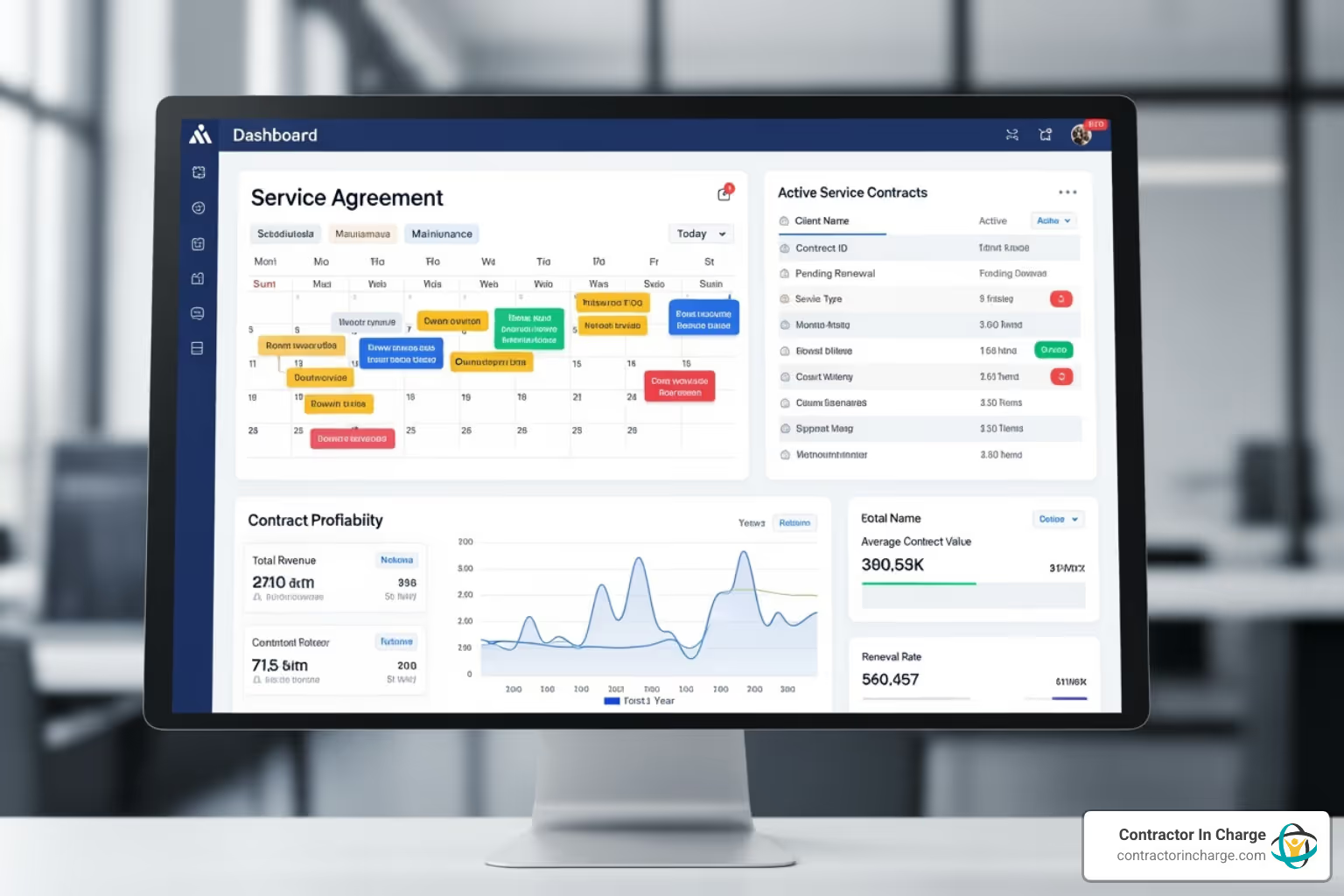
• Centralized Repository: All service agreements live in one secure, accessible, and organized location.
• Automated Workflows: Systems handle the heavy lifting, from scheduling maintenance and sending invoices to issuing renewal reminders.
• Seamless Scheduling and Dispatching: Technicians know where to be, what equipment they’re servicing, and what the agreement covers, eliminating confusion.
• Automated Billing and Invoicing: Ensures you get paid on time by automatically generating and tracking invoices based on contract terms, stabilizing your cash flow.
• Customer Equipment Tracking: A complete service history for every piece of equipment allows for better, more proactive service.
• Proactive Renewal Management: Tracks expiration dates and prompts you to reach out, preventing lost revenue.
• Performance Reporting: Provides clear data on contract profitability and growth opportunities to inform your business decisions.
Understanding how to select a CRM scheduling software that integrates these components is crucial for success.
Automating Your Workflow with Contractor In Charge
Automation isn’t about replacing people; it’s about freeing them up to focus on what matters most.
• Preventative Maintenance Scheduling: Once an agreement is set up, our system automatically schedules all recurring visits. Your technicians show up on time, customers get reliable service, and you don’t have to coordinate it all manually.
• Automated Invoicing: The system knows what each customer owes and when, sending invoices automatically. This streamlines payment collection and reduces cash flow gaps.
• Service History Tracking: Your team has superpowers with complete equipment history at their fingertips. Technicians arrive knowing what work was done last, what parts were replaced, and what issues to watch for. This detailed record-keeping also protects your business in case of disputes.
We’ve seen how artificial intelligence, dispatching and scheduling can transform operations by giving you better tools to do your job.
Features to Look for in Service Agreement Management Support
When evaluating support options, look for these key features:
• Customizable Templates: Flexibility to create consistent agreements that reflect your unique services and pricing.
• Tiered Service Levels: The ability to easily create, track, and bill for different service packages (e.g., Silver, Gold, Platinum).
• Mobile Access for Technicians: Non-negotiable access to agreement details, customer history, and equipment info from the field.
• Integration Capabilities: Your system should connect seamlessly with your accounting, CRM, and other business tools to eliminate duplicate data entry.
• Scalability for Business Growth: The support system should handle increased volume smoothly as your business grows, without multiplying your administrative burden.
The right service agreement management support transforms contracts from a burden into a strategic advantage for predictable revenue and sustainable growth.
The Payoff: Boosting Revenue and Customer Loyalty
Effective service agreement management support isn’t just about organization; it’s an engine for driving revenue and customer loyalty. When managed well, service agreements transform from administrative tasks into the foundation of a thriving business. They represent a promise to the customer and a reliable source of income. However, many contractors stumble on the administrative side, leading to revenue leaks and damaged relationships.
When you get service agreement management support right, the payoff is substantial: guaranteed income streams, long-term customers, and a business model that scales without administrative chaos.

Securing Reliable Recurring Revenue
For home service contractors, recurring revenue provides the stability to grow. Service agreements are the key, but only if managed properly.
• Predictable Cash Flow: Knowing what income is coming in allows you to plan ahead, invest in better equipment, and hire top talent. This stability replaces the feast-or-famine cycle of one-off jobs.
• Guaranteed Income Stream: When a customer signs up for regular maintenance, they provide ongoing work and you gain financial reliability.
• Scalable Growth: With the right support system, you can manage hundreds of agreements as easily as dozens. This is growth without administrative bloat, which directly improves your bottom line.
Having predictable recurring revenue makes it easier to track Key KPIs in Your Plumbing Business and make>Improving Customer Retention and Satisfaction
Happy, loyal customers are the lifeblood of any business. Nothing builds loyalty like consistently delivering on your promises.
• Reliable Service: Automated scheduling ensures customers receive preventative maintenance exactly on schedule. No forgotten appointments, just professional service that shows you value their business.
• Proactive Communication: Automated reminders and follow-ups make customers feel like valued partners, not just transactions.
• Minimized Equipment Downtime: Regular maintenance catches small issues before they become expensive emergencies. Customers appreciate the reliability and peace of mind.
This reliability has a powerful ripple effect. Satisfied customers leave positive reviews and refer new business. Prioritizing better customer service experiences can grow revenues significantly. This approach aligns with the ideas in The Customer Service Trends You Need to Follow in 2022 – Contractor in Charge.
Effective service agreement management creates a virtuous cycle: better service leads to happier customers, more renewals, predictable revenue, and the ability to invest in even better service.
Specialized Agreements and Finding the Right Support
Not all service agreements are created equal. A contract for a homeowner’s annual furnace tune-up is vastly different from one for a commercial property with multiple HVAC units. Managing these varied agreements without proper support is a significant challenge. This is where specialized service agreement management support becomes a necessity.
Residential vs. Commercial Agreements
Understanding the differences between residential and commercial agreements helps you avoid common pitfalls.
• Residential agreements are typically straightforward. They focus on routine service for individual homeowners, with simple terms covering what’s included, the cost, and cancellation policies.
• Commercial agreements are more intricate. They often involve multi-location clients, demanding equipment tracking needs, and varied service levels with priority response times. The legal side is also more stringent, with detailed indemnification clauses, specific insurance stipulations, and adherence to industry compliance standards.
A robust service agreement management support system should handle both types seamlessly within a single platform, allowing you to serve a wide range of customers efficiently.
Finding the Right Service Agreement Management Support
How do you find the right support for your business? You can either manage it in-house or partner with a dedicated support team.
The in-house approach means hiring staff and building your own processes. However, as your business grows, the administrative burden often grows faster, leading to high costs in salaries, training, and management time.
This is why we created Contractor In Charge’s dedicated support services. We handle 24/7 call answering, booking, dispatch, admin, and bookkeeping for home service contractors. Our team becomes an extension of yours, managing your service agreements without the overhead of hiring and training employees.
When assessing your business needs, ask yourself: Are you losing revenue from missed renewals? Is paperwork consuming your technicians’ time? Are customers experiencing inconsistent service? These are signs you need better support.
Scalability is also critical. Your support system must grow with you. Our outsourced model provides the flexibility to scale support up or down as needed. This aligns with our philosophy that Outsourcing Lets You Focus On What You Do Best.
We also help you steer legal pitfalls and ensure compliance. And for broader needs, our Answering Service ensures you never miss a customer call. With over 30 years in the industry, I understand your challenges. Our team at Contractor In Charge is equipped to provide the precise support you need. Get the remote assistance you need to manage your contracts and grow your business without sacrificing the personal touch that sets you apart.
Conclusion
If there’s one takeaway, it’s this: service agreement management support is the foundation of your recurring revenue strategy. Service agreements transform one-time calls into long-term partnerships, guaranteeing a steady income stream and building customer loyalty.
However, managing these agreements manually is a recipe for frustration. It leads to missed renewals, lost revenue, billing headaches, and inconsistent service that erodes customer trust. This administrative chaos prevents you from focusing on what you do best: providing excellent service and growing your business.
It doesn’t have to be this way. With the right service agreement management support, everything changes. Automated scheduling, proactive renewal reminders, centralized data, and integrated billing eliminate errors and free up your team. Your technicians get the equipment history they need to deliver professional service every time.
Effective support scales with your business, whether you’re serving residential homeowners or managing complex commercial accounts. After three decades in this industry, I founded Contractor In Charge to provide a comprehensive solution that combines cutting-edge technology with genuine customer care.
We handle the 24/7 call answering, booking, dispatch, admin, and complete management of your service agreements. This frees your team to focus on fieldwork while we ensure your backend operations run smoothly and profitably.
Your service agreements should be a competitive advantage, not an administrative nightmare. If you’re ready to transform your contract management, we’re here to help.
Get the remote assistance you need to manage your contracts and grow your business.