

Never Miss a Beat: The Contractor’s Guide to Appointment Scheduling Services

Stop Juggling, Start Booking
Outbound calls setting appointments trades is the process of proactively reaching out to potential customers—whether they’re past clients, service area residents, or referrals—to schedule maintenance, installations, or repair appointments before they even think to call you.
Quick Answer: How Outbound Appointment Setting Works for Trades
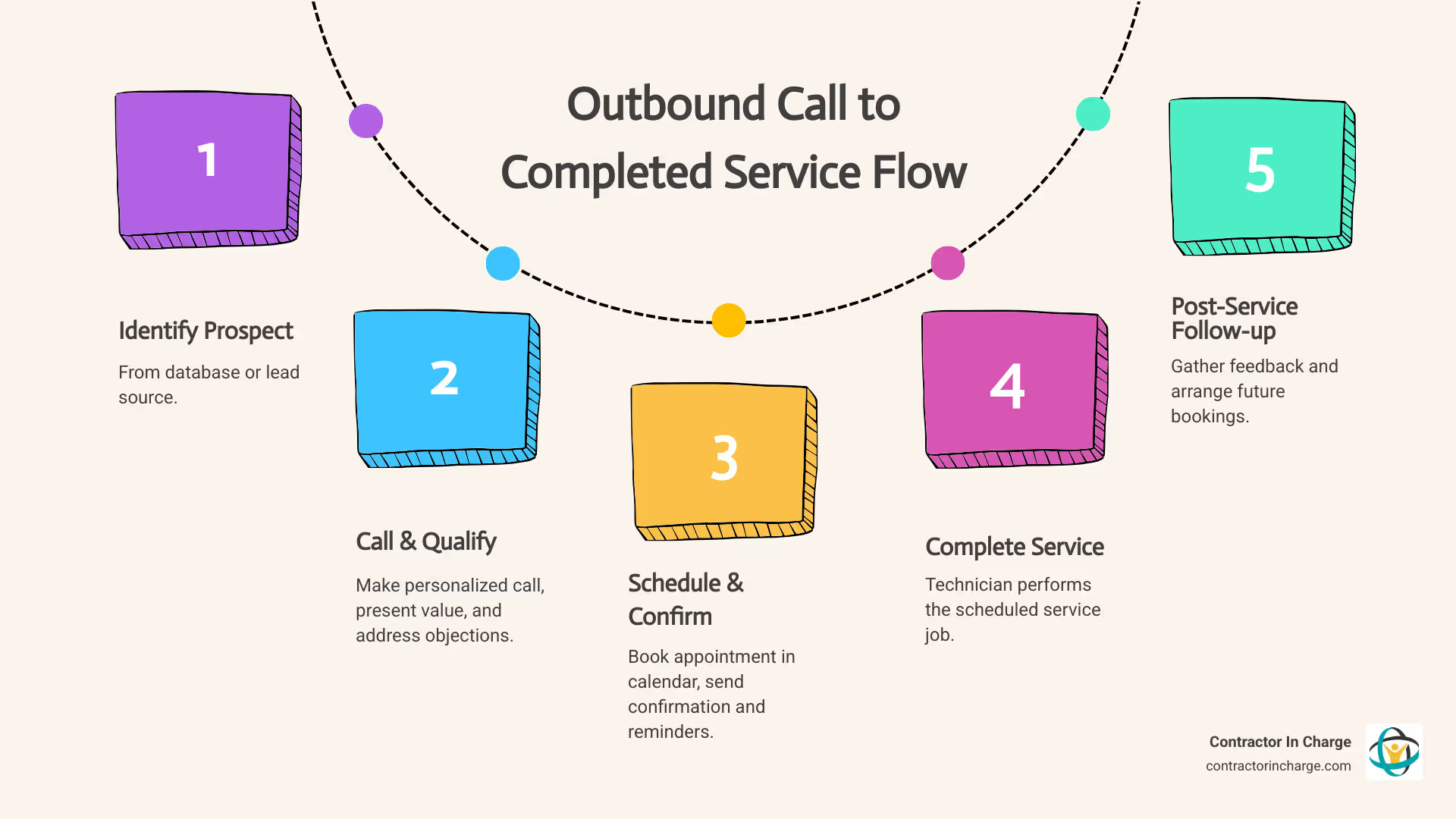
1. Identify prospects from past customers, service area lists, or lead generation sources
2. Make proactive calls using a personalized script that addresses common needs (seasonal maintenance, equipment upgrades, preventive service)
3. Qualify and schedule appointments directly into your calendar
4. Follow up with confirmations and reminders to reduce no-shows
5. Track results using metrics like connection rate, appointments booked, and show-up rate
Key Benefits:
• Fill schedule gaps during slow seasons
• Generate revenue from preventive maintenance
• Re-engage past customers
• Control your pipeline instead of waiting for emergency calls
If your team is spending hours hunting for prospects and dialing numbers that go to voicemail, you’re not alone. For contractors, the problem is even more acute—you’re juggling emergency calls and managing crews while your phone rings off the hook or sits frustratingly silent. The real cost isn’t just wasted time; it’s missed appointments, idle technicians during slow seasons, and customers who forget about maintenance until their system breaks down.
Outbound appointment setting flips the script. Instead of waiting for customers to come to you, you take control of your schedule by reaching out first. You fill gaps with preventive maintenance, follow up on past estimates, and re-engage customers. It’s proactive, strategic, and for trades like plumbing, HVAC, and electrical, it’s the difference between a full calendar and hoping the phone rings.
Think of it this way: appointment setting is the heartbeat of your operations. When it’s done right, your technicians stay busy, your cash flow is predictable, and your business grows without the stress of feast-or-famine cycles.
Many contractors ask office staff to squeeze in calls between other duties, but dedicated appointment setting—whether in-house or outsourced—consistently outperforms scattered efforts. When a team is focused solely on booking appointments, results improve dramatically.
The good news? You don’t need a massive sales team to make outbound appointment setting work. With the right approach—whether that’s training your team, using modern tools, or partnering with a specialized service—you can build a system that keeps your calendar full and your revenue flowing.
I’m Anna Lynn Wise, CEO and founder of Contractor In Charge, and I’ve spent decades working with trade businesses to solve operational challenges like outbound calls setting appointments trades. After owning and managing a plumbing, HVAC, and remodeling company, I understand how critical a full schedule is to profitability and growth.
Why Your Trade Business Needs a Proactive Appointment Strategy
It’s Tuesday afternoon, and your best technician is idle. Meanwhile, hundreds of homes in your service area need maintenance on furnaces, water heaters, or electrical panels. The problem? Those homeowners aren’t calling you. They’re busy, procrastinating, or simply don’t realize they need your services yet.
This is why outbound calls setting appointments trades is a game-changer for contractors serious about growth. Instead of waiting for the phone to ring, you take control of your calendar and revenue. You reach out to past customers due for maintenance, follow up on cold estimates, and remind people that preventive service beats emergency repairs.
When you shift to a proactive approach, you’re not just filling schedule gaps—you’re building a predictable customer pipeline. You can expand into new markets because you’re actively introducing yourself instead of hoping people find your website. You generate leads on your terms, not just responding to whoever happens to call.
A proactive appointment strategy is about taking charge of your business destiny. It’s the difference between hoping for work and creating work. For contractors who want to scale beyond the chaos of emergency-only service, it’s essential. Learn more about effective business growth strategies that successful contractors use.
Understanding what lead generation really means helps clarify why outbound efforts matter. You’re not waiting for interest to appear—you’re creating it through strategic outreach.
The Difference Between Outbound and Inbound Leads
Let’s clarify how these two approaches work for trade businesses.
Inbound leads are warm prospects—the homeowner whose furnace just died, the property manager who filled out your contact form, or a referral. They are already looking for you and took the first step. Your job is to answer quickly and convert that interest into a booked appointment.
Outbound leads are business-initiated contacts where you make the first move. You might call a customer about annual maintenance or reach out to homeowners in a new neighborhood. These are “cold” leads because they haven’t expressed interest yet, but that doesn’t mean they don’t need your services.
Inbound leads typically convert faster, while outbound leads require more nurturing but give you control over your pipeline. The best contractors use both approaches as part of their overall marketing strategy. Inbound captures immediate demand, while outbound creates new opportunities.
The Importance of a Full Schedule for Contractors
An empty schedule is more than inconvenient—it’s expensive. When your technicians are fully booked, you’re maximizing their time and generating revenue. Every hour they sit idle costs you money.
A full calendar also means improving cash flow. Instead of a feast-or-famine cycle, you have a steady income. This allows you to pay bills on time, invest in better tools, and sleep better at night.
That consistency creates predictable revenue, which is a powerful advantage. When you know what’s coming in, you can make smarter decisions about hiring, equipment purchases, and expansion. You’re running a business, not just reacting to emergencies.
Finally, a proactive appointment strategy makes scaling operations possible. You can hire another technician knowing you have the appointments to keep them busy. You can expand into a new service area with confidence because you’re actively generating demand.
This focus on efficiency isn’t about squeezing every dollar out of your team. It’s about building a sustainable business where technicians have consistent work, customers get reliable service, and you have time to plan for the future.
Mastering the Call: Best Practices for Setting Appointments

The success of outbound calls setting appointments trades comes down to how well your team handles the calls. It’s not about being pushy; it’s about being helpful, persistent, and prepared. The best callers connect with people who have real problems that need solving.
Essential Skills for an Effective Outbound Appointment Setter
Great appointment setters are separated from mediocre ones by a few key skills. It starts with communication mastery, which includes explaining value simply, persuading without being aggressive, and practicing active listening. When you hear what a prospect is really saying, you can tailor your response to their needs.
Top 5 Skills Every Appointment Setter Needs:
1. Communication – Clear, persuasive, and genuinely listening
2. Resilience – Bouncing back from rejection without taking it personally
3. Organization – Managing call lists, follow-ups, and scheduling efficiently
4. Research – Knowing the prospect before you dial
5. Empathy – Understanding and addressing real pain points
Persistence and resilience are crucial. In outbound calling, you will hear “no.” Successful setters understand that rejection isn’t personal—it’s feedback. They take notes, learn, and try a different approach next time.
Research skills are a game-changer. Before calling, a quick look at a prospect’s history can transform a cold call into a warm conversation. Time management and organization keep the operation running smoothly, often with the help of a CRM to track every interaction.
Above all, empathy is the most important skill. It’s about genuinely caring if your solution helps someone. When you address the real concern behind a homeowner’s words—like the worry of their family being cold if the furnace breaks—you build trust.
Crafting the Perfect Script for Outbound Calls Setting Appointments Trades
A script is a safety net, not a prison. It ensures you cover key points while allowing for genuine human interaction. A good script is a flexible framework.
• Strong Opening: Skip the generic “How are you today?” and get straight to the point. “This is Sarah from Contractor In Charge. I’m calling because you’re due for your annual HVAC tune-up before the summer heat arrives.” This immediately establishes relevance.
• Value Proposition: Frame it from their perspective. Instead of “We provide HVAC maintenance,” say “I’m calling to help you avoid a summer breakdown and potentially save on cooling costs.”
• Addressing Pain Points: Show you understand their worries, like unexpected repair bills or system failures. Position your service as the solution.
• Clear Call-to-Action: The goal is to book an appointment, not sell the service. Make it simple: “I have openings on Tuesday afternoon or Thursday morning. Which works better for you?”
• Personalization: Mention their neighborhood or a past service. This shows you’ve done your homework and improves the customer experience.
• Avoid Sounding Robotic: Internalize the key messages, but let the conversation flow naturally. Rapport is built in these unscripted moments.
Handling Objections and Gatekeepers Like a Pro
Every “no” is valuable information. When someone says “I’m not interested,” listen, acknowledge, and gently explore why. Maybe the timing is off, or they don’t see the value yet.
• “I’m not interested”: Acknowledge and reframe. “I understand. Most people don’t think about their plumbing until there’s a problem. That’s why we’re calling—to catch small issues before they become expensive emergencies.”
• “It’s too expensive”: This usually means they don’t see the value. Respond with understanding. “I hear you. A $150 maintenance visit often prevents a $1,500 emergency repair. It’s a small investment in peace of mind.”
• “I don’t have time”: Respect their time. “I get it. How about I send a quick email with the details? You can book online at your convenience.”
Use feedback to refine your approach and always maintain professionalism.
Gatekeepers—like office managers or spouses—aren’t your enemy. Treat them with respect, and they can become allies. Be straightforward about why you’re calling and why it matters. If the answer is “no,” ask for a better time to follow up. Turn a “no” into a “maybe later” by leaving the door open for future opportunities.
The Modern Contractor’s Toolkit for Outbound Calls Setting Appointments Trades

Making outbound calls setting appointments trades today is nothing like it was a decade ago. Modern technology has transformed appointment setting into a strategic, efficient process. The right tools don’t just save time—they make every call count and ensure no opportunity slips through the cracks.
Leveraging Technology to Boost Efficiency
At the heart of any outbound strategy is a solid CRM system. It’s your business’s memory, tracking every conversation and customer detail. When your appointment setter calls, they aren’t flying blind; they know the customer’s history, making every call feel personal. You can learn more about how to select a CRM scheduling software that fits your needs.
• Auto-dialers revolutionize call volume by automatically dialing numbers and connecting your team only when a live person answers. This means more conversations and less wasted time.
• Scheduling software integrated with your CRM lets prospects see your open slots and book instantly. Automated reminders dramatically reduce no-shows.
• Automation tools handle routine tasks like follow-up emails and re-engagement messages, freeing your team to focus on building relationships.
We’ve also found success with a beachhead strategy: book a basic maintenance check, then uncover opportunities for larger projects during the visit. Technology helps track and nurture these potential upsells.
While phone calls are powerful, multi-channel outreach meets prospects where they are, whether it’s email, social media, or digital business cards. The key is having systems that coordinate all these channels.
Our commitment to innovation shows in initiatives like Contractor In Charge Artificial Intelligence Dispatching and Scheduling, which optimizes how appointments are scheduled and technicians are dispatched.
Building Trust and Rapport Over the Phone
All the technology in the world won’t help if you can’t connect with people. Outbound calls setting appointments trades succeed or fail based on trust, which comes from genuine human connection.
• Establish Credibility: Start with a confident but friendly tone. Speak knowledgeably about common homeowner problems to demonstrate expertise. Mentioning successful projects in their neighborhood adds social proof.
• Personalize Interactions: Using a person’s name and referencing their address or a previous service shows you’ve done your homework. It proves this isn’t just another number on a list.
• Follow Through on Promises: If you say you’ll email information, do it promptly. Every kept promise reinforces that you’re reliable.
• Be Transparent: Be upfront about why you’re calling. “I’m calling because we’re scheduling seasonal HVAC tune-ups in your area, and I wanted to make sure you’re on the list” is honest and direct.
Building your brand through channels like social media to grow your home service business also helps. When prospects recognize your company name, you’re not starting from zero. Technology gives you the tools to reach people efficiently; trust gives them a reason to say yes.
Scaling Your Operations: In-House vs. Outsourced Appointment Setting
As your business grows, you face a pivotal decision: build an internal appointment-setting team or partner with a specialized service? There’s no one-size-fits-all answer. It depends on your resources, growth plans, and need for control.
In-House vs. Outsourced Appointment Setting
An in-house team for outbound calls setting appointments trades means you’re in the driver’s seat. You control the hiring, training, and scripts. Your setters become part of your company culture. However, this approach requires a serious investment in salaries, benefits, technology, and management time.
Outsourcing flips this equation. You get immediate access to trained professionals with proven systems and technology. They can start making calls within days, not months. For smaller businesses or those testing new markets, this is a game-changer. As we often say, outsourcing lets you focus on what you do best—performing your trade and keeping customers happy.

Whichever path you choose, data analytics are your compass. A/B testing scripts and analyzing call outcomes helps refine your strategy and ensure your efforts align with sales goals.
Key KPIs for Outbound Calls Setting Appointments Trades
You can’t improve what you don’t measure. For outbound calls setting appointments trades, tracking the right Key Performance Indicators (KPIs) is essential.
• Calls per day: Measures activity and effort.
• Connection rate: Shows the percentage of calls that reach a live person.
• Appointments set: The headline number, showing how many bookings were made.
• Show-up rate: Measures how many booked appointments actually happen.
• Cost per appointment: An efficiency metric that shows if your investment makes financial sense.
• Lead quality score: Assesses whether appointments match your ideal customer profile.
These metrics paint a complete picture of your performance. For more insights, check out our guide on key KPIs in your plumbing business, which applies to any trade.
The Pros and Cons of Third-Party Appointment Setting
Outsourcing outbound calls setting appointments trades isn’t perfect, but for many contractors, it’s the smartest move.
Pros:
• Instant Expertise: Third-party companies live and breathe appointment setting. They have refined approaches and technology.
• Cost Savings: You avoid salaries, benefits, and overhead. You pay for results and can scale services up or down as needed.
• Focus: It frees your internal team to focus on their core strengths, like performing the work that generates revenue.
Cons:
• Less Direct Control: You give up some direct oversight of daily details and coaching.
• Brand Representation: You must trust that the outsourced team will represent your brand properly.
• Learning Curve: Even the best team needs time to learn your specific services, market, and ideal customer.
When evaluating partners, apply the same scrutiny you’d use for choosing the right answering service. Look for industry experience and a willingness to act as a true extension of your team.
Frequently Asked Questions about Appointment Setting for Trades
What’s a realistic number of appointments to expect from outbound calls?
There’s no magic number, as results from outbound calls setting appointments trades vary based on several factors. While a newer setter might book 1-3 appointments per 100 calls, the following factors are more important:
• List Quality: A warm list of past customers will always outperform a cold list of random addresses.
• Script Quality: A script that sounds like a natural conversation and clearly explains the benefit to the homeowner will convert better.
• Caller Skill: An experienced caller with strong listening skills and resilience will book more appointments.
• Service Type: A routine maintenance visit is an easier booking than a full system replacement with a new customer.
• Target Market: The demographics and needs of your target audience will influence results.
My advice to contractors is to focus on quality over quantity. It’s better to book five solid appointments with qualified prospects than fifteen appointments where half are no-shows. Set realistic goals based on your specific situation, and your numbers will steadily improve with experience.
How much does it cost to outsource appointment setting?
The investment varies by provider and pricing model. Common structures include:
• Per-hour pricing: You pay for the agent’s time, offering predictable costs but not directly tying payment to results.
• Per-appointment pricing: You pay a set fee for each qualified appointment booked. This model aligns the provider’s success with yours.
• Per-qualified-lead pricing: Similar to per-appointment, but may include prospects who meet criteria even if an appointment isn’t set.
When evaluating costs, compare them to the true cost of an in-house team (salaries, benefits, training, software, management time). Most importantly, consider the Return on Investment (ROI). If outsourcing fills your calendar with profitable jobs, the cost often pays for itself many times over.
At Contractor In Charge, we believe in transparent pricing with no hidden fees, so you see the straightforward value that helps your business grow.
Can an outsourced team really understand my trade business?
• Industry Specialization: Look for providers who work specifically with trade businesses. They already understand your industry’s seasonal demands, customer pain points, and terminology.
• Thorough Onboarding: A good partner will dive deep into your specific services, unique selling points, ideal customer, and company culture. This information is crucial for effective training.
• Custom Script Development: The team should use your language and reflect your brand personality. The script should be custom to your business, whether you’re known for being friendly or for emphasizing safety.
• Continuous Training: The best providers monitor calls, provide feedback, and adjust strategies based on performance data. It’s an ongoing partnership, not a one-time setup.
When done right, your outsourced appointment setters become a true extension of your team. Our clients often say their customers can’t tell they’re speaking with a remote team—and that’s exactly how it should be.
Conclusion: Book More Jobs, Grow Your Business
Waiting for your phone to ring is a recipe for stress and unpredictable income. Outbound calls setting appointments trades flips that script. It puts you in the driver’s seat, giving you control over your calendar, cash flow, and business’s future.
We’ve covered how a proactive strategy changes everything, from the skills your team needs to the technology that multiplies efficiency. We’ve also walked through the decision of building an in-house team versus partnering with a specialized service. The common thread is taking action instead of waiting.
Most contractors got into this business to practice their craft, not to make sales calls. That’s where professional support makes a difference. Whether you train your staff or partner with a dedicated service, you’re freeing yourself to focus on what you do best while ensuring your calendar stays full.
At Contractor In Charge, we’ve been in your shoes. We built our solution to combine cutting-edge technology with genuine customer care, creating a dedicated team that acts as a seamless extension of your business.
Our approach isn’t just about answering phones. It’s about proactively filling your schedule and giving you the predictability you need to grow with confidence. We handle the calls, bookings, and follow-ups so you can focus on your trade.
Ready to stop juggling and start booking? Get started with Remote Assistance today, and let’s build a system that keeps your business thriving.